
Science Matters: Eberly College Impact
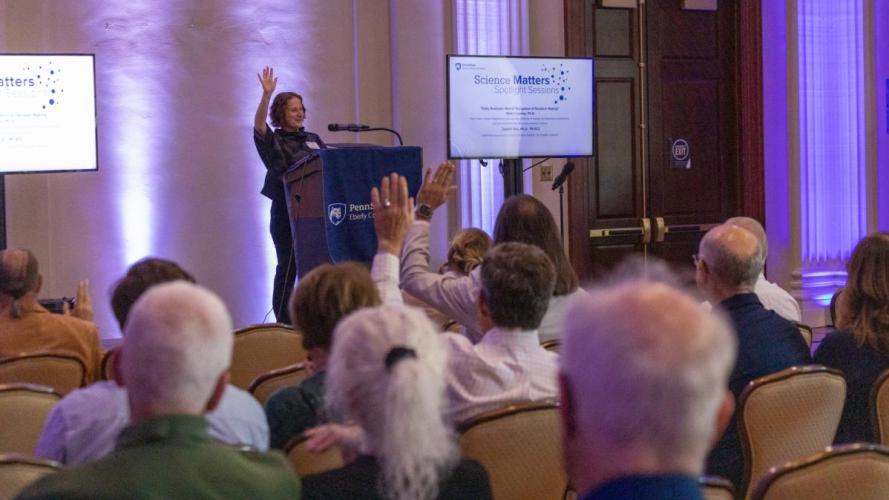
The Science Matters Spotlight Sessions series provides a unique opportunity for the community to engage directly with the brilliant minds working on the front lines of discovery to create positive, real-world impact. Join the college’s top scientists in candid, down-to-earth conversations that answer today’s most pressing questions—how science is shaping our lives, our society, and our future.
In addition to the contemporary questions outlined below, the college has a history of contributions.
Looking back to see forward, Penn State Eberly scientists are working on multiple fronts and across varied disciplines, from the molecular to the cosmic scale, harnessing high-powered technologies to better understand how our world and life in the universe came to be—because understanding our origins is key to building a better future.

Scientists across the Eberly College are studying the origins of life and the universe from a number of angles—spanning the life, mathematical, and physical sciences—utilizing cutting-edge instrumentation and supercomputing resources and leveraging the strength of Penn State’s interdisciplinary research culture.
From the origin of cells to the evolution of lifeforms ranging from microbes to mammals, the college’s biochemists and biologists, chemists, data scientists, and others are working together to unlock the secrets of life itself, using powerful Penn State–developed and –codeveloped tools such as the Galaxy bioinformatics software platform and BLAST (basic local alignment search tool) and with the support of the Institute for Computational and Data Sciences’ high-performance computing infrastructure.
Supported by the same supercomputing resources as well as cutting-edge Penn State–developed instruments, Eberly’s astronomers and astrophysicists, cosmologists, and data scientists together are studying exoplanetary systems, dark matter and dark energy, gravitational waves, and multimessenger phenomena, while also peering back in time toward the very first moments of the universe and searching for signs of life and intelligence elsewhere in our solar system and beyond.
|
Image

|
Image

|
|
Image

|
Image

|
|
Image

|
Image

|
|
Image

|
Image

|
|
Image

|
Image

|
|
Image

|
Image

|
|
Image

|
Image

|
|
Image

|
Image

|
|
Image

|
Image

|
|
Image

|
Image

|
|
Image

|
Image

|
|
Image

|
Image

|
|
Image

|
Image

|
|
Image

|
Image

|
|
Image

|
Black holes everywhere! Ten years of LIGO and gravitational waves
The LIGO Scientific Collaboration, which includes Penn State scientists, Virgo and KAGRA celebrate anniversary; announce verification of Stephen Hawking's black hole area theorem.
Mysterious ‘red dots’ in early universe may be ‘black hole star’ atmospheres
The objects that astronomers at Penn State dubbed ‘universe breakers’ could be an exotic black hole atmosphere, representing a missing link in the rapid growth of supermassive black holes.
The universe is the world’s biggest laboratory, both awesome and inspiring. Our 2023 revelation that massive galaxy formation began extremely early in the history of the universe, for example, upends what many of us had thought was settled science,” said Leja. “We’ve been informally calling these objects ‘universe breakers’ — and they have been living up to their name so far.
Joel Leja, Dr. Keiko Miwa Ross Early Career Assistant Professor
With cutting-edge research tools and multidisciplinary collaborations, Penn State Eberly scientists are combining their expertise to unlock the very code of life—to inform the development of individually tailored, “precision medicine” treatments, discover and develop new therapeutic drugs, and help provide healthier futures for all.
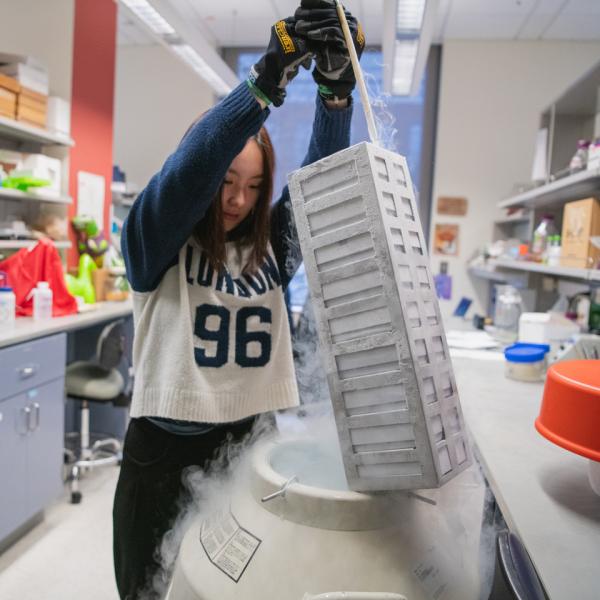
Scientists across the Eberly College are creating the medicine of the future from across a range of disciplines—from the life sciences to the mathematical sciences—using world-class research facilities and supercomputing resources and leaning into Penn State’s well-established interdisciplinary culture to find insights and innovative solutions.
From genomics and neuroscience to the microbiome, the college’s biochemists and biologists, bioinformaticians and other computational scientists, chemists, geneticists, statisticians, and others are working together to decipher the human genome and uncover the causes of inherited diseases, identify potential targets for therapeutic drugs, and even develop new candidates for those drugs—using powerful Penn State–developed and –codeveloped tools such as the Galaxy bioinformatics software platform and BLAST (basic local alignment search tool), supported by the Institute for Computational and Data Sciences’ high-performance computing infrastructure, and bolstered by partnerships with the Penn State Milton S. Hershey Medical Center and collaborations in the Penn State Huck Institutes of the Life Sciences’ One Health Microbiome Center.
|
Image

|
Image
|
|
Image

|
Image

|
|
Image

|
Image

|
|
Image

|
Image

|
|
Image

|
Image

|
|
Image

|
Image

|
|
Image
|
Image
|
|
Image

|
Image
|
|
Image

|
Image

|
|
Image
|
Genes associated with obesity shared across ancestries, researchers find
Researchers identify thirteen obesity genes shared worldwide, including five new ones
Background genetic variants influence clinical features in complex disorders
New study reveals how the complex interplay of genetic background can lead to different clinical presentations in individuals that share a primary genetic variant
Complete genome sequences of six ape species unveiled
Previously inaccessible regions reveal novel insights that may advance understanding of evolution and conservation genetics for endangered apes as well as human health
Researchers assemble 51 animal genomes using publicly accessible workflows
Galaxy platform re-invents genome assembly pipeline, which could inform understanding of human health and evolution
The human brain may represent the pinnacle of evolution, and Penn State Eberly scientists are working to decipher its secrets—for better health, longevity, and happiness.
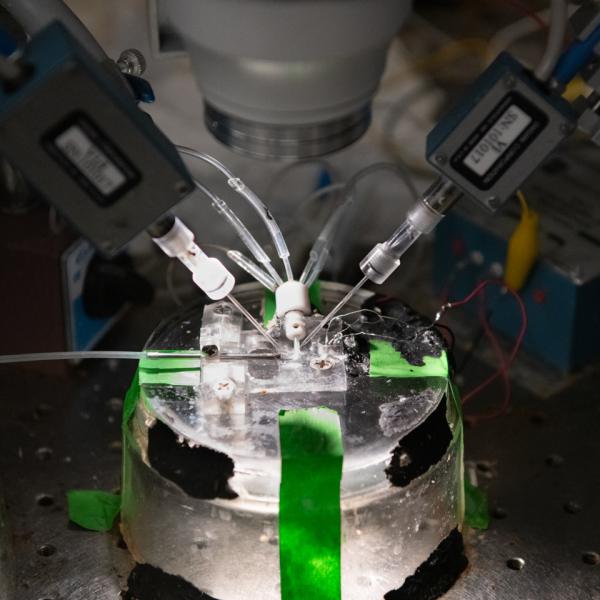
Faculty from across the Eberly College of Science’s Departments of Biochemistry and Molecular Biology, Biology, Mathematics, Physics, and Statistics are studying the brain from numerous angles—underpinned by the interdisciplinarity of the Penn State Huck Institutes of the Life Sciences and its Neuroscience Institute and Center for Brain, Behavior, and Cognition, as well as collaborations with the University’s Colleges of Medicine and Health and Human Development—to understand the nervous system’s evolution and specialization, the mechanics of aging and memory, and the causes of neurodegenerative diseases.
|
Image
|
Image

|
|
Image

|
Image

|
|
Image
|
Image

|
|
Image

|
Image

|
|
Image
|
Image

|
|
Image

|
Image

|
Can digital replicas of patients help personalize Alzheimer’s treatment?
New NSF grant supports project to build “digital twin” replicas of patients using clinical data to study disease progression and treatment options
When dreams turn dark: Neuroscientists to study nightmares and mental health
Penn State neuroscientists receive a $1.2 million grant to study the mechanism behind nightmares
Progress runs on power, and Penn State Eberly scientists are working to make energy and the technologies and economies it drives more sustainable for present and future generations.
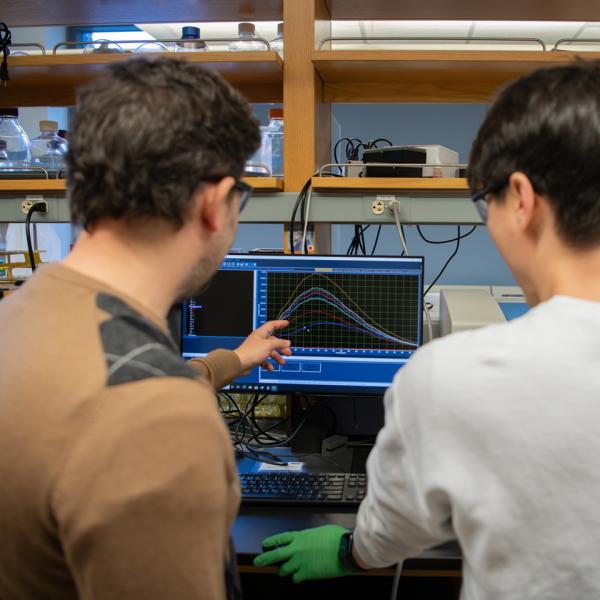
Faculty from across the Eberly College of Science are working on sustainable energy- and materials-related research spanning diverse areas from plant biology to materials science and chemistry, developing potential solutions in biofuels, next-generation photovoltaics, and rare earth minerals. Notable collaborations are happening in the multi-institutional Center for Lignocellulose Structure and Formation and a number of other centers and research groups across the college and University.
|
Image

|
Image

|
|
Image

|
Image

|
|
Image

|
Image

|
(Super) Positioned for Quantum Tech
How Eberly College of Science researchers are mastering the very small for very big applications
Stem cell-like approach in plants sheds light on specialized cell wall formation
New method reprograms isolated plant cells to form other cell types
Feeding the future is no small task, but Penn State Eberly scientists are working on solutions for people and the environment, to increase our resilience in the face of extreme weather and natural disasters that increasingly threaten the world’s food supplies and economies as well as people’s lives and livelihoods.
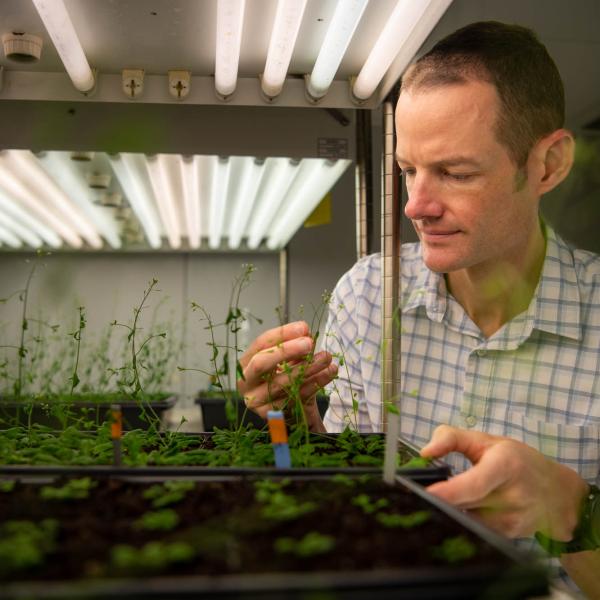
Scientists in the Eberly College are working on issues related to extreme weather and food security from across a range of research disciplines—from biology and chemistry to mathematics—focusing on mitigating environmental and social impacts as well as improving crop resilience and disease monitoring and mitigation, including using artificial intelligence (AI) software algorithms.
|
Image
|
Image

|
|
Image

|
Image

|
|
Image

|
Image

|
|
Image
|
Image

|
|
Image

|
Image

|
|
Image

|
Image

|
|
Image

|
Image

|
|
Image

|
Image

|
|
Image

|
Image

|
|
Image

|
Image

|
|
Image

|
Image

|
|
Image

|
Messenger signals that cue plants to ‘eat’ and ‘breathe’ revealed for first time
New study reveals how plants coordinate their inner metabolism with the environment
How a genetic tug-of-war decides the fate of a honey bee
Researchers uncover how a molecular tug-of-war between maternal and paternal genes determines whether a honey bee becomes a queen or a worker
How do you like them apples? Apple genus evolution revealed
New study reveals evolutionary relationships of the apple genus, which could guide future breeding programs
Infectious diseases have devastating impacts, and our health and that of our loved ones often depends on common-but-lifesaving drugs. Penn State Eberly scientists are using some of the most powerful tools available at the leading edge of research to help improve our response to outbreaks and make sure the treatments and preventive measures we rely on continue to work when we need them most.
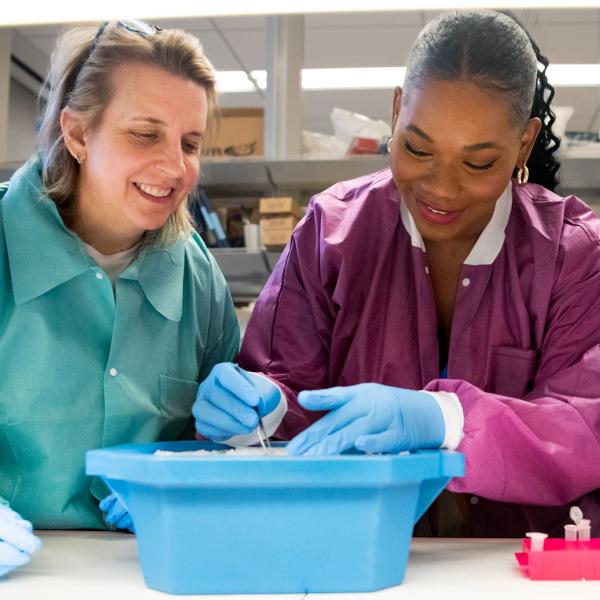
Scientists across the Eberly College are studying infectious diseases, pandemics and other outbreaks, and drug resistance from a number of angles—spanning the life, mathematical, and physical sciences—utilizing cutting-edge instrumentation and laboratory facilities and leveraging the strength of Penn State’s interdisciplinary research culture.
Particularly through collaborations in the Huck Institutes of the Life Sciences’ Centers for Infectious Disease Dynamics and Mathematical Biology and partnerships with the US Centers for Disease Control and Prevention, World Health Organization, and Gates Foundation, and supported by world-class facilities including the biosafety level 3 Eva J. Pell Laboratory for Advanced Biological Studies and the Huck Institutes’ Cryo-Electron Microscopy Facility, the college’s biologists and biochemists, molecular biologists and mathematicians, physicists and statisticians and working together to find the mechanisms underlying drug-resistant infections and improve disease detection and surveillance, predictive modeling, and control.
|
Image

|
Image

|
|
Image

|
Image

|
|
Image
|
Image
|
|
Image
|
Image

|
|
Image

|
Image

|
|
Image

|
Image

|
|
Image

|
Image

|
|
Image

|
Image

|
|
Image

|
What traits matter when predicting disease emergence in new populations?
Traits of early virus spread help determine if a virus will ultimately persist in a new population, according to new research
Predicting vaccination levels without accurate or timely vaccination data
Researchers at Penn State and the World Health Organization develop method to predict measles vaccination levels using routinely collected clinical data on suspected measles cases
Structure of tick-borne virus revealed at atomic resolution for the first time
Structure of Powassan virus (POWV), an emerging virus in North America, revealed in new study
Disrupting parasite gene regulation reveals new malaria intervention strategy
A new study has gained critical insights into these regulatory control mechanisms in Plasmodium falciparum, the deadliest of the malaria parasites
Focus on sanitation and clean water may improve control of endemic cholera
Pathogens that persist in hosts and environments may require tailored management strategies, according to new study of endemic cholera interventions in Sub-Saharan Africa
From supercomputers to smartphones, electric vehicles, LEDs, and medical diagnostics equipment, innovations in nanoscale materials and quantum science enable next-generation technologies through the critical components like semiconductors that help to power them.
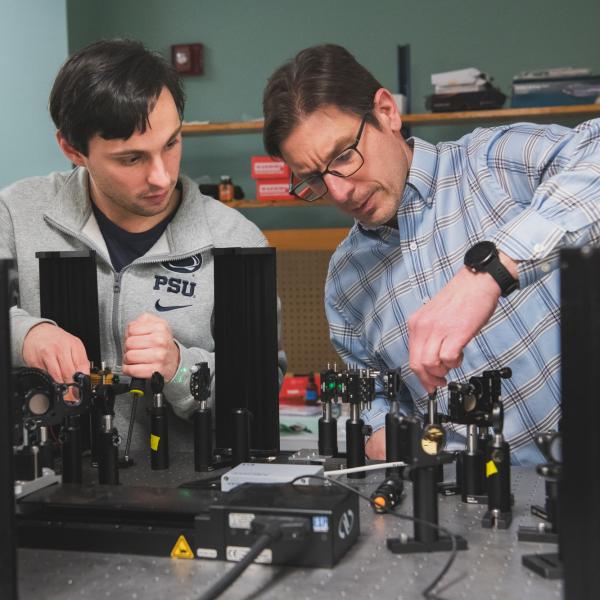
Scientists in the Eberly College are studying nanoscale and quantum materials from a variety of perspectives—spanning the physical and mathematical sciences—utilizing cutting-edge instrumentation and laboratory facilities and leaning into the strength of Penn State’s longstanding interdisciplinary research culture. Bolstered by collaborations across the college and University and supported by the Penn State Materials Research Institute’s Nanofabrication Laboratory and National Science Foundation–supported Two-Dimensional Crystal Consortium, the college’s physicists, mathematicians, and chemists are working together to develop new materials and technologies, as well as theories that explain the innermost workings of matter at nanometer and quantum scales.
|
Image
|
Image

|
|
Image

|
Image

|
|
Image
|
Image

|
|
Image

|
Image

|
|
Image

|
Image
|
|
Image

|
Image

|
|
Image

|
Image

|
|
Image

|
Image

|
|
Image

|
Image

|
|
Image
|
Image

|
|
Image
|
Image

|
|
Image

|
Can nanobots play follow the leader?
Researchers at Penn State demonstrate the first steps in the design of tiny particles that can perform specialized tasks, such as targeted delivery of drugs or other cargo
Gold clusters show promise as scalable options for quantum computers, sensors
New study shows how gold nanoclusters mimic key properties of the most accurate systems currently used in quantum applications and can even be tuned to improve accuracy
Penn State Eberly scientists are using powerful computing tools to drive technological innovations that better science and society while also protecting our personal data and privacy.

Faculty in the Eberly College of Science’s Departments of Mathematics and Statistics, in collaboration with researchers across the University and supported by the supercomputing capabilities of the Penn State Institute for Computational and Data Sciences, are working on issues related to data protections and privacy, big data, and the use of artificial intelligence (AI), as well as statistical tools that improve both scientific research and society—from predictive modeling to politics to personal computing.
|
Image
|
Image
|
|
Image

|
Image

|
|
Image

|
Image
|
|
Image
|
Image

|
|
Image

|
Image

|
|
Image

|
Image
|
|
Image

|
Image

|
|
Image

|
Image
|
|
Image

|
Image
|
|
Image

|
Can digital replicas of patients help personalize Alzheimer’s treatment?
New NSF grant supports project to build “digital twin” replicas of patients using clinical data to study disease progression and treatment options
New method calculates rate of gene expression to understand cell fate
Researchers unveil the spVelo method to map cell gene-expression changes more precisely
Improving education for the next generation of scientists is a key focus in our classrooms, our peer-reviewed research and far beyond. Eberly researchers are working to give undergraduate and graduate educators the most transformative and cutting-edge tools to prepare their STEM students to drive positive change in their communities and in society—today and tomorrow.
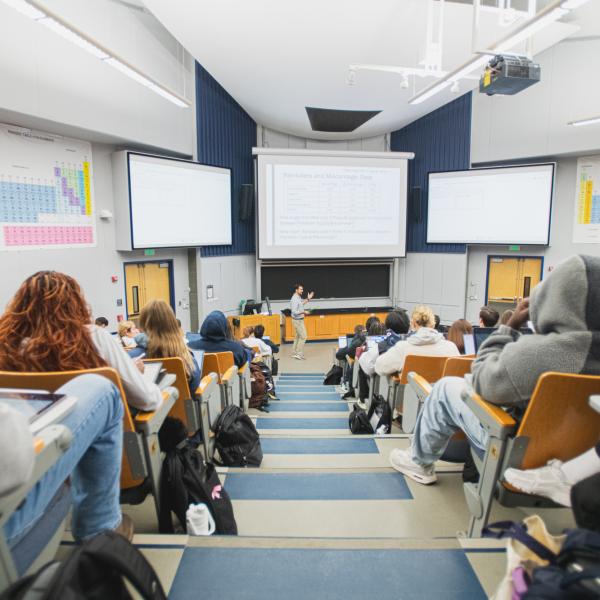
Scientists across the Eberly College are studying how curricula, teaching and engagement practices in the sciences can continue to improve for undergraduate and graduate students. With the proliferation of artificial intelligence (AI) to the advancement of new scientific findings and tools, Eberly researchers are advancing how we teach science to the next generation of students. Our peer-reviewed research spans the integration of AI in the classroom, strengthening hands-on experiences, building real-world skills, increasing access to teaching resources and improving peer-facilitated learning, for a transformative, interdisciplinary education to better help students learn.
|
Image
|
Image

|
|
Image

|
Image
|

|
Image

|
|
Image

|
Image

|
|
Image

|
Image

|
|
Image

|
Image

|
Spotlight on the Learning Assistant Program
How students in the Eberly College of Science have the opportunity to work in the classroom and hone their communication and leadership skills
Can AI Help Instructors Provide Timely, Detailed Feedback to Students in Large Classrooms?
Researchers are working to develop and evaluate a new AI Tool to help instructors provide feedback in large classrooms
How is AI shaping teaching and learning in higher education?
AI tools have the potential to considerably impact the education that students receive