
Meet the Dean

"As dean of the Eberly College of Science, I aim to advance fundamental discovery-focused research and educate a diverse population of scientifically trained leaders and innovators."—Tracy Langkilde
Tracy Langkilde is internationally recognized for her research in herpetology, the biology of amphibians and reptiles. Her recent work has been at the interface of ecology and evolution, focused on understanding how organisms’ behavior and physiology are matched to their environment, and how they respond to novel selective pressures imposed by global environmental change. She came to Penn State in 2007 and was appointed head of the Department of Biology in 2016. Langkilde was appointed dean of the Eberly College of Science on August 24, 2020. Read more about Dean Langkilde.



Featured Insights
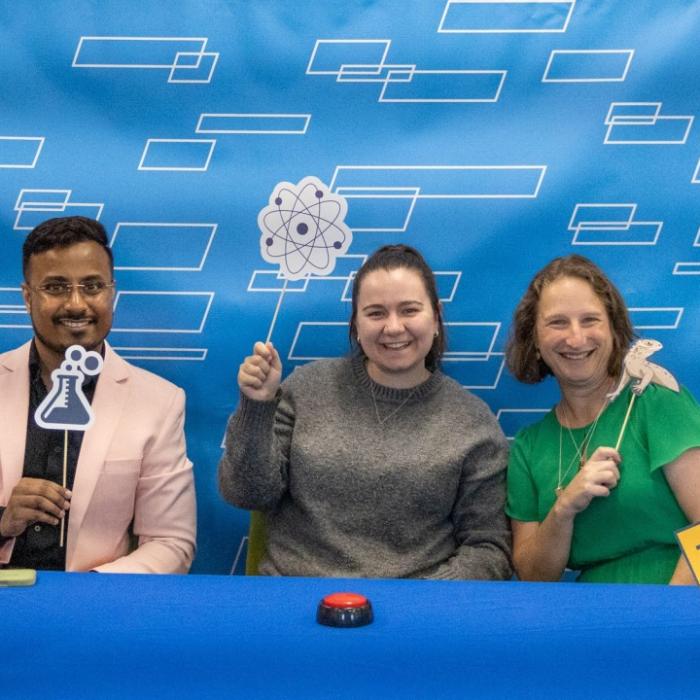
Tracy Langkilde: College community connections, but make it trivia!
Tracy Langkilde: Celebrating women in science, this month and every month

Uplifting underrepresented voices in STEM

In The News
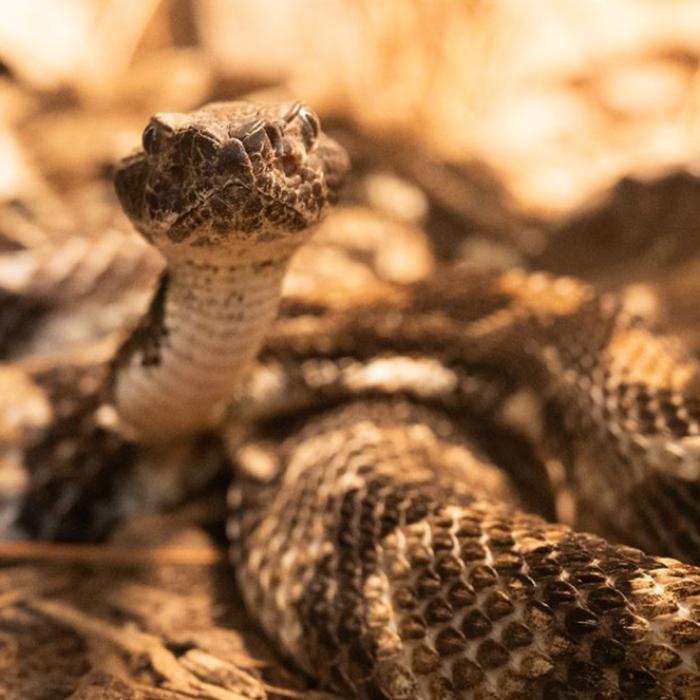
Snakes in Pa., including its 3 venomous species, really just want to be left alone
September 26, 2026
Meet the Gamechangers: Tracy Langkilde
March 8, 2024

This lizard species stress-eats to cope with noisy US Army aircraft
March 29, 2023

Read More
- Fox News: "College students are struggling with basic math, many stuck at 9th grade level; professors blame the pandemic."
- Penn State News: "Search launched for new dean of the Penn State College of Engineering." Dean Langkilde will chair the search committee for the next Harold and Inge Marcus Dean of the College of Engineering.
- Smithsonian magazine: "These Lizards Stress-Eat When Loud Military Aircraft Fly Overhead"
- Centre Daily Times: "Under the baobab: The women who have distinguished themselves in Happy Valley and beyond"
- The Conversation: "Native eastern fence lizards changed their bodies and behavior in response to invasive red imported fire ants"
- Centre Daily Times: "Meet the Penn State deans: Tracy Langkilde talks cats, nature — and Vegemite vs. peanut butter"
- Penn State News: "Penn State leaders provide overview of budget allocation model at town hall"
- Newsweek "One Way to Kill Fire Ants Instantly: Eat Them"
- Penn State News: "Eating fire ants could prepare lizards for future fire ant attack"
- Centre Daily Times: "How a Penn State Program aims to launch State College students' interest in STEM fields"
Video Messages
Watch More
Penn State Alumni Association on YouTube: "A Passion for Science. A Commitment to Diversity"
- Dean Langkilde was featured by the Pennsylvania Commission for Women as part of their National STEM (Science, Technology, Engineering, and Math) Day event to highlight women in various STEM careers | Commonwealth of Pennsylvania YouTube: "Pennsylvania Women in STEM Video Series"
- Penn State News on YouTube: "Eating Fire Ants Like a Lizard Vaccine"
- Dean Langkilde shares her favorite thing about Penn State in the University's 2022 End of Year Video | Penn State University YouTube: "Our Favorite Things at Penn State / 2022 End of Year Video"
Eberly College of Science on YouTube: "Lizards adapt to invasive fire ants, reversing geographical patterns in traits"
About the Dean

Tracy Langkilde is internationally recognized for her research in herpetology, the biology of amphibians and reptiles. Her recent work has been at the interface of ecology and evolution, focused on understanding how organisms’ behavior and physiology are matched to their environment, and how they respond to novel selective pressures imposed by global environmental change. She came to Penn State in 2007 and has served as the department head of biology since 2016. Langkilde was appointed dean of the Eberly College of Science on August 24, 2020.
She began her academic career in 2007 as an assistant professor of biology at Penn State and advanced to associate professor in 2012 and then professor in 2016. She has been a leader in graduate and undergraduate education and programs in biology, and over her tenure at the University has trained 8 postdoctoral scholars, 13 doctoral students, and 2 master’s students, as well as more than 60 undergraduates in her research program. Langkilde has also championed a number of initiatives advancing inclusion, equity, and diversity at Penn State, promoting excellence in research and education, and engaging students, faculty, and alumni across the University, and she continues to mentor graduate and undergraduate students in her research lab, located in Müller Laboratory.
Langkilde earned her bachelor’s degree in 1999 from the School of Tropical Biology at James Cook University and her doctorate in 2005 from the School of Biological Sciences at the University of Sydney, after which she pursed postdoctoral studies as a Gaylord Donnelley Environmental Postdoctoral Fellow at Yale’s School of Forestry and Environmental Studies for two years prior to her first academic appointment at Penn State. For her research, Langkilde was named Distinguished Herpetologist—the field’s top honor—in 2019 by the Herpetologists’ League, an international organization of people devoted to studying herpetology. And in 2011, she received the Edward D. Bellis Award in Ecology for her outstanding contribution and dedication to educating and training graduate students in Penn State’s Intercollegiate Graduate Degree Program in Ecology. Langkilde was also as a featured researcher in one of the most widely used biology undergraduate textbooks, Campbell Biology.
From the Dean
"The Penn State Eberly College of Science is at the forefront of scientific research and education. We attract world-renowned faculty in the life, physical, mathematical, and interdisciplinary sciences who push the boundaries of scientific knowledge and discovery through creative thinking, risk-taking, and collaboration. We provide inclusive training to passionate and talented students—from Pennsylvania, across the nation, and around the world—who aspire to be the next generation of science leaders. Our faculty employ innovative approaches in our classrooms and labs to inspire discovery and problem-solving, positively impacting the lives around us and the world we live in.
"As dean of the Eberly College of Science, I aim to advance fundamental discovery-focused research; educate a diverse population of scientifically trained leaders and innovators; create a college climate that rewards creative thinking, risk-taking, collaboration, and innovative thought; enhance the public’s understanding of and trust in science; and translate our discoveries into positive action for the common good.
"Communicating the importance and influence of science in our society has never been more critical. Today we face the dual threat of a pandemic and the manifestations of climate change. With a focus on resilience and sustainability, science provides solutions to these problems through the engagement of diverse thoughts, approaches, and expertise of our best scientists—of all backgrounds. The time for science is now, for everyone, and the place for it is the Penn State Eberly College of Science."
Tracy Langkilde
Verne M. Willaman Dean
Penn State Eberly College of Science