Physical Sciences

Hundreds of Missing Black Holes Found
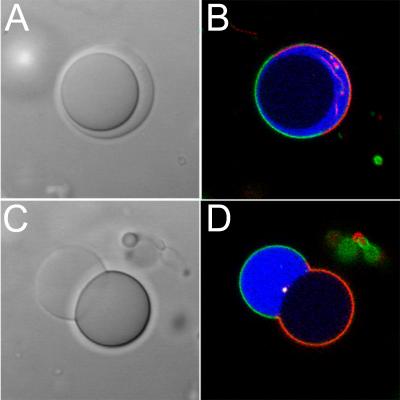
Simple Model Cell is Key to Understanding Cell Complexity
Image
Credit: Christine Keating, Penn State  The model cell developed in the lab of Christine D. Keating at Penn State uses as the cytoplasm a solution of two different polymers, PEG and dextran (Panel A). The image in Panel B is the image in Panel A highlighted with fluorescent dyes.
Physicists Demonstrate How Information Can Escape From Black Holes
Image
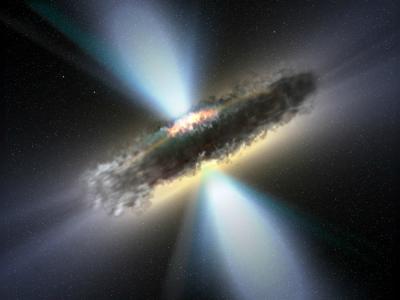
Credit: ESA / V. Beckmann (NASA-GSFC)  An artist's depiction of the accretion of a thick ring of dust into a supermassive black hole. The accretion produces jets of gamma rays and X-rays.
Jainendra K. Jain Honored by American Academy of Arts and Sciences
Enzyme Complex Could be Key to New Cancer Treatments
Image
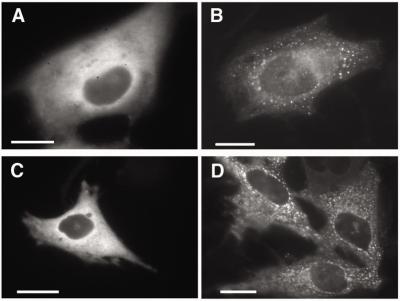
Credit: Erin Sheets lab  In these microscopic images of cells, the white areas indicate the presence of enzymes. The enzymes in images A and C are distributed throughout the cytoplasm because these cells were grown in the presence of purines. In contrast, the enzymes in images B and D occur in small clusters because these cells were grown in the absence of purines.
Superbright Explosion is Most Distant Object Ever Visible to the Naked Eye
Image
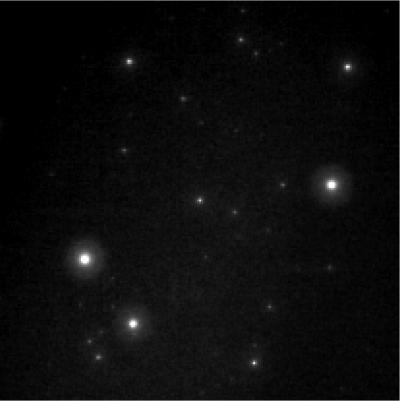
Credit: Pi of the Sky  GRB 080319B's optical afterglow appears in the center of this image from Pi of the Sky, a Polish group that monitors the sky for afterglows and other short-lived sources.
Scientists See Norwalk Virus' Achilles Heel
Single-Crystal Semiconductor Wire Built into an Optical Fiber
Samarth Earns Faculty Scholar Medal for 2008
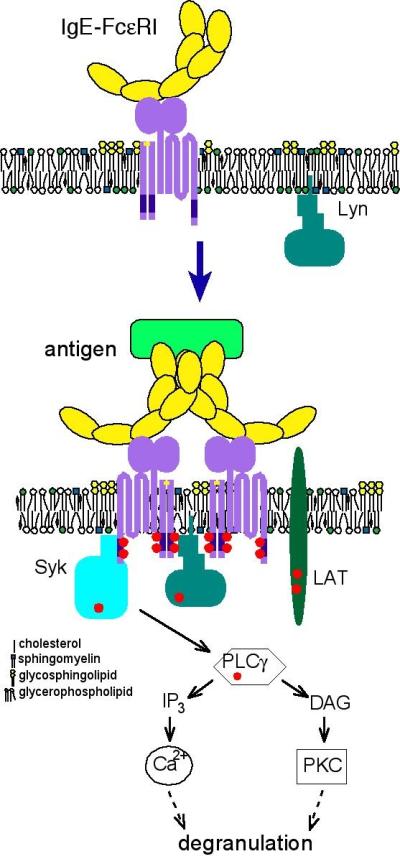
Allergic Response Tied to Lipid Molecules in Cell Membrane
Image
Image courtesy of Erin Sheets, Penn State  Illustration of antigen-mediated cross-linking of IgE receptors on the cell membrane and their translocation into cholesterol-rich lipid domains.
Subscribe to Physical Sciences