
Scientists Snap First Images of Brown Dwarf in Planetary System
Image
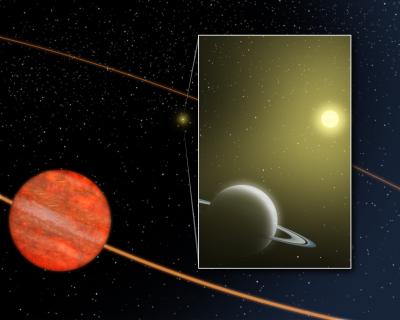
This is an artist's concept of the star HD 3651 as it is orbited by a close-in Saturn-mass planetary companion and the distant brown dwarf companion discovered by Spitzer infrared photographs. Credit: NASA / JPL-Caltech / T. Pyle (SSC)
Earth-Like Planets May Be Common in Known Planetary Systems
Image
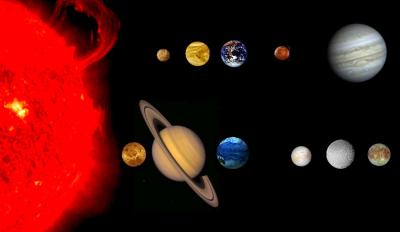
This image shows the differences (not to scale) between the inner regions of our Solar system, and a simulated planetary system containing a "hot Jupiter".
Planet or a Failed Star? . . . Discovery Reveals One of the Smallest Stellar Companions Ever Seen
Image
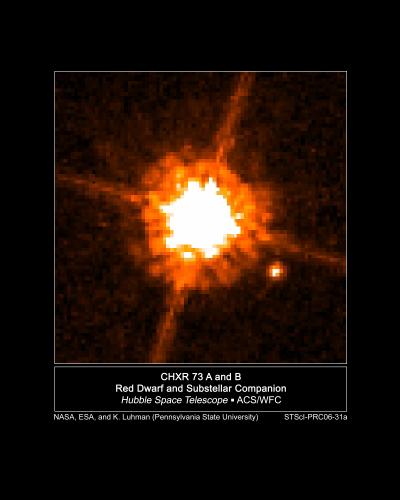
This NASA Hubble Space Telescope image shows one of the smallest objects ever seen around a normal star. Astronomers believe the object is a brown dwarf because it is 12 times more massive than Jupiter. The brown dwarf candidate, called CHXR 73 B, is the bright spot at lower right. It orbits a red dwarf star, dubbed CHXR 73, which is a third less massive than the Sun. At 2 million years old, the star is very young when compared with our middle-aged 4.6-billion-year-old Sun.
Bee Researchers Close in on Colony Collapse Disorder
South African Clone of Penn State Telescope Makes First Scientific Discovery
Image
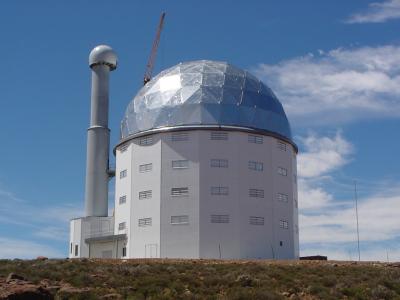
The Southern African Large Telescope
Research Paper Illuminates How Light Pushes Atoms
Image
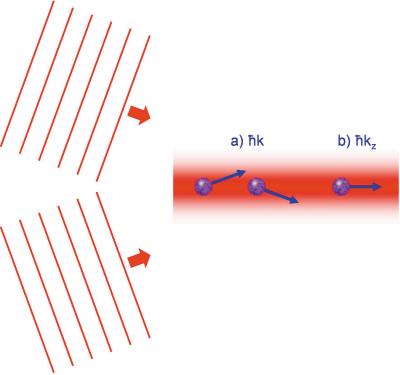
A pencil-like laser beam can be made by intersecting two infinitely wide light waves at a small angle. "You might think that an atom would absorb a photon randomly from only one of the beams," as depicted in the section labeled a), "but this paper shows that the atom recoils with a speed that is less than it would get from the momentum of either of the infinitely wide photons, with no sideways recoil," as depicted in b).
New Method for Dating Art Prints and Early Books Borrows Know-How from Genetic Science
Image
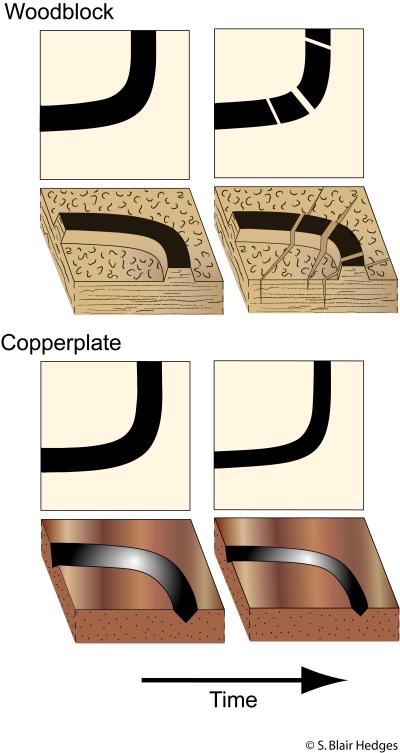
The print clock. In these models, close-ups of a carved woodblock (above) and engraved copperplate (below) are shown, corresponding to a curved black line on the print behind it, at two time periods. Image courtesy of Blair Hedges, Penn State
Giant Deep-Sea Tubeworm's Meal Ticket Comes in as a Skin Infection
Image
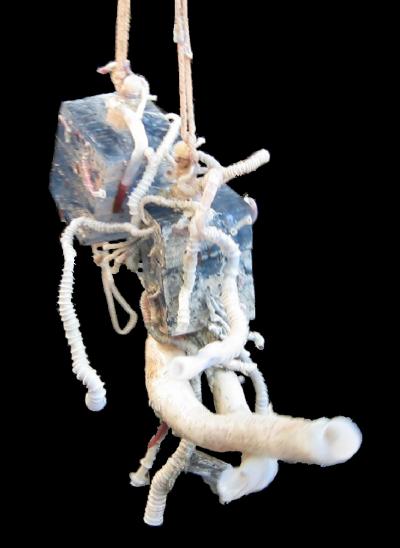
Credit: Andrea D. Nussbaumer, Charles R. Fisher and Monika Bright  Tubeworm artificial settlement cubes after one year deployment at the East Pacific Rise in 2500 m depth.
How Big is Big? Probing the Conditions of the Universe on the Largest Scales
Image
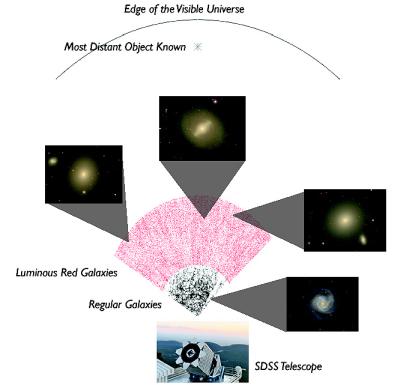
Credit: Hogg, SDSS-II collaboration The SDSS telescope at Apache Point, NM has been used to create a map of regular galaxies (black points) and luminous red galaxies (red points) out to 40% of the distance to the edge of the visible universe. Light from the most distant red galaxies has taken 5.6 billion years to reach us, while the edge of the visible universe is 13.7 billion light years away. This map of the universe allowed astronomers to detect galactic structures more than a billion light years across.
X-rays Fly as Cracking Comet Streaks Across the Sky
Image
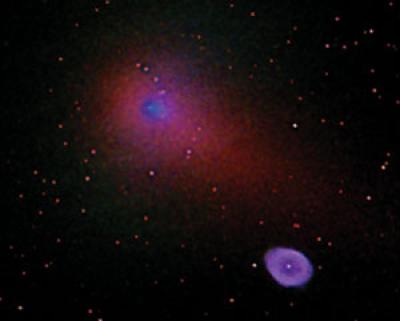
NASA's Swift satellite captured this image of comet 73P/Schwassmann-Wachmann 3 as it chanced to fly in front of the Ring Nebula.
Subscribe to Research