
Penn State Researchers Look Beyond the Birth of the Universe
Image
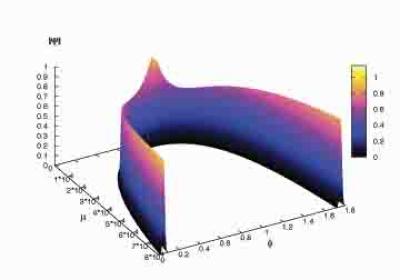
 The figure represents our expanding universe as the right branch of the arc.
Methane-Belching Bugs Inspire a New Theory of the Origin of Life on Earth
Image
More that twenty years ago, Penn State's James G. Ferry first isolated Methanosarcina acetivorans from anaerobic sediment beneath a kelp bed. Ferry and Christopher House, also at Penn State, have helped uncover the biochemistry this microbe uses to make vinegar out of carbon monoxide. Now they suggest that this a primitive version of this unique biochemistry may have fueled the metabolism of the first life forms on earth.
Massive Duplication of Genes May Solve Darwin's "Abominable Mystery" about Flowering Plants
Image
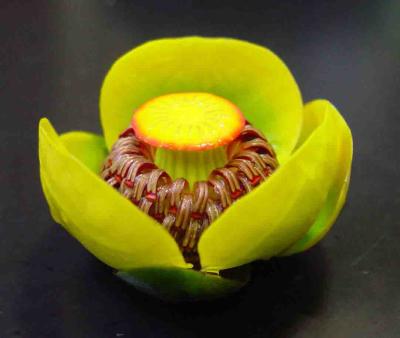
The yellow water lily (Nuphar advena) shows evidence of an ancient genome duplication that may have been a key event in the evolution of flowering plants.Photographs by Yi Hu, Penn State Eberly College of Science Department of Biology.
Two Milky Way Companion Galaxies Discovered
Image
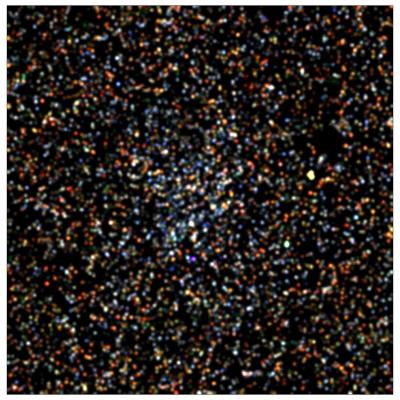
The Constellation Bootes
Penn State Joins New Survey to Monitor the Sky
Image
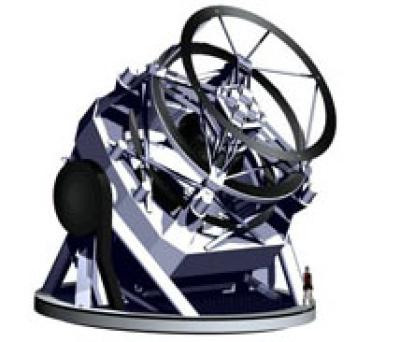
A current rendering of the 8.4-meter LSST which will use a special three-mirror design, creating an exceptionally wide field of view. The LSST will have the ability to survey the visible sky in only three nights. Credit: LSST Corporation
Gases in One Dimension -- Not Your Typical Desk Toy
Image
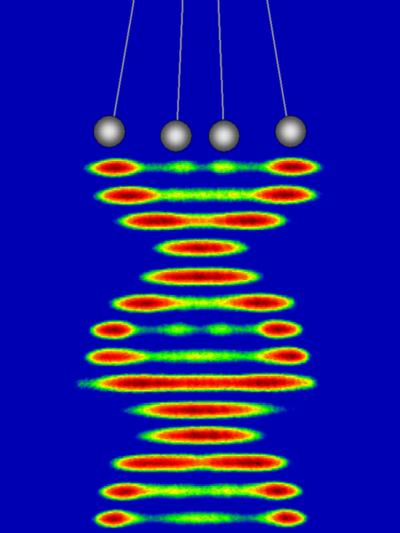
Images of quantum Newton’s cradles during their first cycle of oscillation. Credit: David Weiss, Penn State
New Tools Developed for Studying Neurodegenerative Brain Disorders
Image
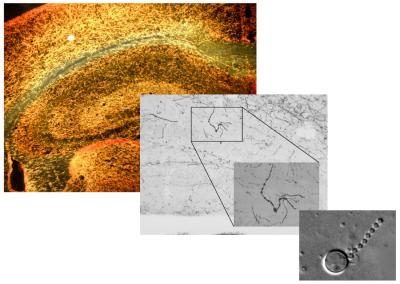
A simple biophysical model of an axon was used to study the catastrophic consequences of oxidative stress to neurons.
New Process Builds Electronic Function into Optical Fiber
Image
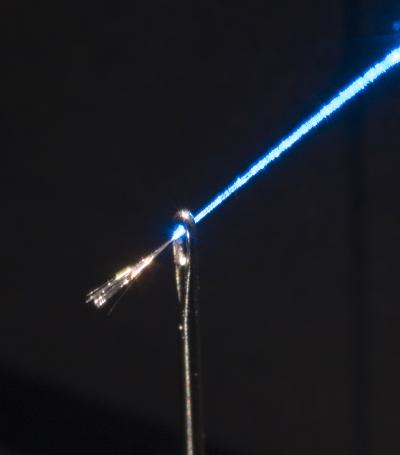
Credit: Neil Baril, Penn State This photo shows a glass fiber with a bundle of semiconductor wires emanating from it. Each wire is just 2 microns in diameter — 20 times smaller than a human hair. The glass fiber is glowing from blue laser light.
Scientists Piece Together the Most Distant Cosmic Explosion
Image
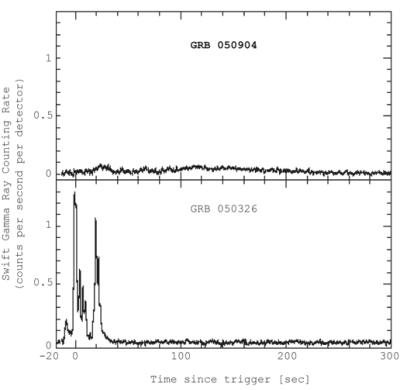
Image credit: Dr. Neil Gehrels Figure above: Shows the counting rate in the gamma-ray instrument on Swift for two gamma-ray bursts. The top panel is for the high redshift burst observed on September 4, 2005 (GRB 050904). The bottom panel shows a typical burst for comparison; it is the one Swift detected on March 26, 2005 (GRB 050326). GRB 050904 is fainter and much longer than typical.
Swift Satellite Detects Unusual Cosmic Explosion
Image
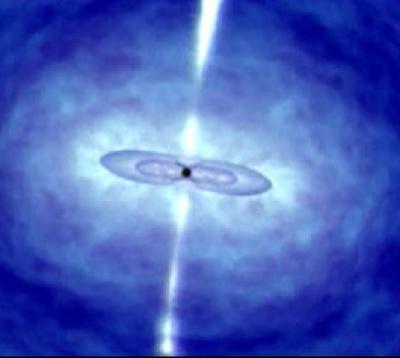
The collapsing star scenario that is one of the leading contenders as the cause of gamma-ray bursts. Dr. Stan Woosley of the University of California at Santa Cruz proposed the collapsar theory in 1993. This artist's concept of the collapsar model shows the center of a dying star collapsing minutes before the star implodes and emits a gamma-ray burst that is seen across the universe. Credit: NASA/Dana Berry
Subscribe to Research