
Cosmic Explosion Could Be Black Hole Swallowing Neutron Star
Image
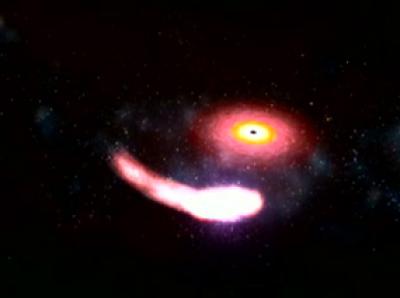
Scientists, including astronomers and astrophysicists at Penn State, have found evidence of a black hole swallowing a neutron star in the afterglow of a split-second flash of intense energy known as a short gamma-ray burst. The events leading up to the gamma-ray burst are shown here. In the minutes and hours that followed, the black hole gobbled up the remaining remnants of the neutron star, producing a series of X-ray flares. Credit: NASA
Scientists Find Possible Birth of Tiniest Known Solar System
Image
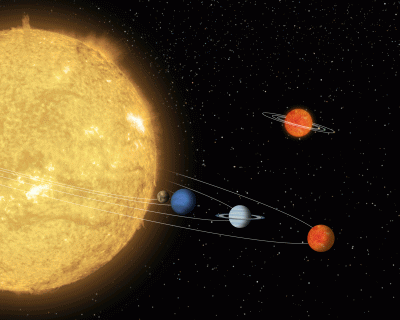
This artist's conception compares a hypothetical solar system centered around a tiny "sun" (top) to a known solar system centered around a star, called 55 Cancri, which is about the same size as our Sun. Credit: NASA/JPL-Caltech
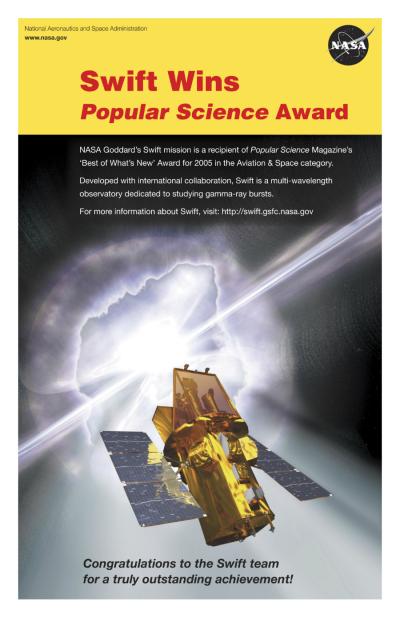
Swift Satellite Hailed as "Best of What's New" in Popular Science
Image
Swift Satellite Hailed as "Best of What's New" in Popular Science
Penn State Astrophysics Major Chosen as Marshall Scholar
Short Flash from Enormous Explosion Solves Cosmic Mystery
Image
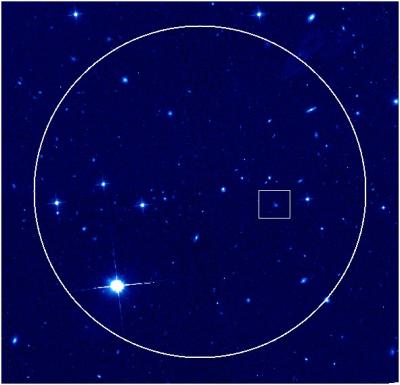
Credit: Derek Fox/Penn State University Hubble Space Telescope image of the sky surrounding the afterglow and host galaxy of the HETE short burst of July 9, 2005. The circle indicates the region of sky that HETE saw the burst from; according to the HETE team we would find the burst within this region. The box, inset, indicates where the X-ray and optical afterglow of the burst was ultimately found. The colors indicate the intensity of red light (814 nm) as seen by the Advanced Camera for Surveys instrument
NASA Satellite, Controlled by Penn State, Detects Most Distant Explosion
Image
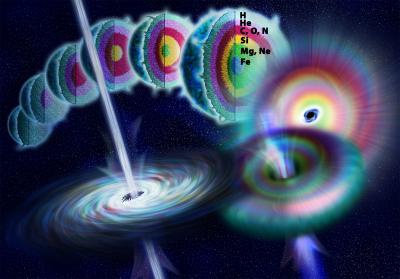
Image Credit: Nicolle Rager Fuller/NSF
South African Telescope, Patterned After Hobby-Eberly Telescope, Sees First Light
Image
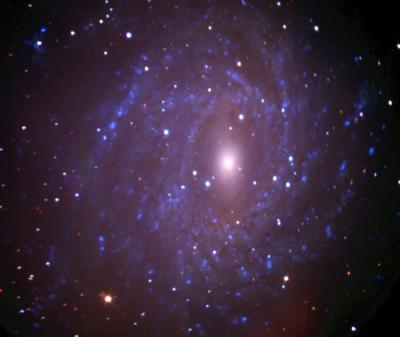
Image courtesy of South African Large Telescope, © SALT
Trumpler 14: Bright Young Stars Mix It Up
Image
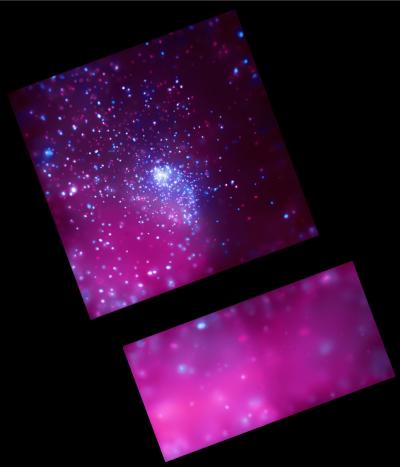
Credit: NASA/CXC/Penn State/L.Townsley et al. Chandra's image of the star cluster Trumpler 14 shows about 1,600 stars and a diffuse glow from hot multimillion-degree X-ray-producing gas. The cluster has one of the hightest concentrations of massive, luminous stars in the Galaxy. Located on the edge of a giant molecular cloud, it is part of the Carina Complex which contains at least 8 star clusters.
NASA'S Swift Satellite Finds Newborn Black Holes
Image
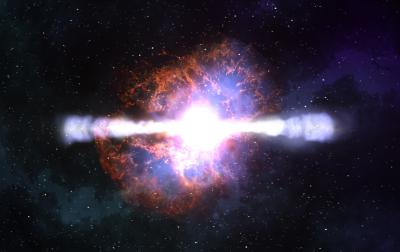
Credit: NASA/GSFC/Dana Berry
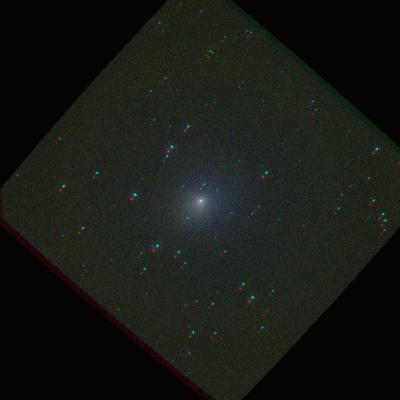
Scientists Measure How Deep "Deep Impact" Was, With X-rays
Image
False-color image of Comet Tempel 1 taken on 1 July 2005 with the Swift Ultraviolet Optical Telescope. The picture was formed from images taken separately through V, B, U, and Ultraviolet filters and corrected for the comet's motion before being combined. As a result, the background stars appear as a series of images in different colours.
Subscribe to Astronomy and Astrophysics