
Science Matters: Eberly College Impact Timeline
For decades, the federal government has turned to researchers like those in the Penn State Eberly College of Science to pursue basic scientific knowledge in a wide array of fields, including health care, materials, and national security. Because of the long-term nature of discovery, such investment is crucial for encouraging basic scientific research—the bedrock for the applied research that results in the applications and inventions that transform lives, drive workforces and economies, and improve societies.
Over the years, Penn State’s unique interdisciplinary research culture has brought scientists in these fields together to create positive, real-world impact. With breakthroughs ranging the atomic scale to the cosmic, from human health and food safety to the foundations of computer programming, data science, machine learning, and artificial intelligence, our scientists have been making discoveries for more than a century that improve the lives of people the world over—from Pennsylvania to Palau and beyond.
Eberly College of Science began as a department of chemistry, becoming the School of Natural Science in 1896, the School of Chemistry and Physics in 1926, the College of Chemistry and Physics in 1953, and the College of Science in 1963. It has always had as its central goals the education of first-rate scientists and generation of high-quality research. Today, with more than 56,000 alumni and more than $126 million spent annually on research (provided mostly by grants and contracts from government and industry), the college demonstrates real success.
Evan Pugh, a prominent agricultural chemist, became the first president of Penn State, which was then the Farmers’ High School.
Pennsylvania’s first pure food laws were founded on William Frear’s research in agricultural chemistry. His pioneer analyses of foods enabled the state to enforce truth-in-labeling laws, an early win for consumer protection.
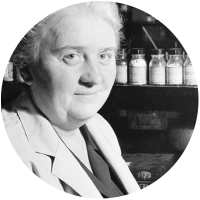
Mary Willard, the daughter of Joseph Willard (namesake of Willard Building), graduated from Penn State with a bachelor’s degree in chemistry in 1920 and became an assistant in the Chemistry department. She obtained her doctorate from Cornell in 1927 and returned to Penn State as an assistant professor. She was well known for her microscopy research and internationally known for her forensic research. Willard was the first person to be recognized by Penn State for excellence in teaching.
Teresa Cohen became the first female faculty in the mathematics department at Penn State after she became the first woman in the nation to earn a doctorate in mathematics, which she obtained from Johns Hopkins in 1918.
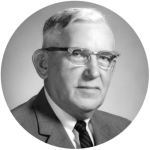
Marsh White, in 1926, earned the first ever doctoral degree from Penn State – a physics degree. After graduating from Penn State in 1926, White joined the faculty as a professor of Physics, retiring in 1960.
Physicist Ferdinand Brickwedde, dean of Penn State's School of Chemistry and Physics and later the College of Chemistry and Physics from 1951–1963, codiscovered deuterium—a hydrogen isotope found in "heavy water" and used in nuclear and biological research—and produced the first measurable amount of it in 1931. This form of hydrogen plays a key role in nuclear energy and biological research.
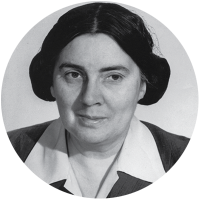
Pauline Mack was the first woman to earn a doctorate at Penn State, awarded in agricultural biochemistry. A brilliant interdisciplinary scientist and educator at Penn State between 1919 and 1950, she made numerous scientific contributions.
At Pond Laboratory, pioneer steroid chemist Russell Marker discovered the first practical synthesis of the pregnancy hormone, progesterone. His research laid the foundation for such medical applications as the birth control pill, cortisones, and various hormone and steroid therapies.
William G. Pritchard established the first physical laboratory housed in a mathematics department.
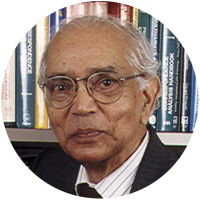
C.R. Rao, emeritus holder of the Eberly Family Chair in Statistics at Penn State, established the Rao-Blackwell and Cramer-Rao theorems revolutionizing how we analyze data and laying foundations still used today.
Haskell Curry pioneered the study of combinatory logic, which is the foundational basis to today's computer programming language.
Mary Lister McCammon created the first mathematics placement test for first-year students at Penn State.
Erwin Müller, Evan Pugh Research Professor of Physics, became the first person to see an atom through the field ion microscope that he invented. The Müller Exhibition.

Harry Allcock developed macromolecular substitution, a method for synthesizing polymers, which has had an impact on the development of fuel cells, lithium batteries, scaffolds for biomedical tissue generation, etc.
Leonid Vaserstein, emeritus professor of mathematics, created the Wasserstein metric—a distance measurement for comparing groups of data or probabilities that is used in data science, machine learning, and AI. Rather than condensing data into a single metric like an average, the metric allows for the comparison of distributions of data. Foundational to today’s AI models, the metric is widely used in statistics and mathematics and has become increasingly popular as its intensive calculation has been streamlined by modern computational technology. Learn more about Wasserstein metric.
Rustum Roy founded the Science, Technology and Society program at Penn State, which became a model for similar programs at universities across the nation.

The Mészáros effect, or Mészáros equation, is an equation in physical cosmology developed by Peter Mészáros, Penn State's Eberly Family Chair in Astronomy and Astrophysics and professor of physics, that quantifies how cold dark matter influences the initial formation of galaxies and galaxy clusters.
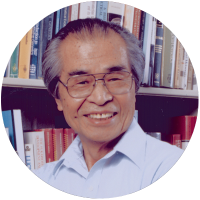
Masatoshi Nei, Evan Pugh University Professor Emeritus at Penn State and a pioneering evolutionary geneticist, invented the influential “Nei’s distance,” a cornerstone of population genetic analyses that changed how scientists study the history of populations.

An authority on the work of Srinivasa Ramanujan, the great Indian mathematical genius of the late 19th and early 20th centuries, George Andrews discovered Ramanujan's Lost Notebook, a finding that changed the shape of modern q-series research.

Paul Baum formulated the Baum-Connes conjecture—an idea that opened a critical avenue of research for mathematicians. The Baum-Connes conjecture is unusual in that it cuts across several different areas of mathematics, revealing connections between mathematical problems and issues that previously had appeared to be unrelated.

Abhay Ashtekar, Evan Pugh University Professor Emeritus Atherton Professor, established loop quantum gravity—a leading approach toward the unification of general relativity and quantum physics—bringing us closer to understanding how space and time really work.
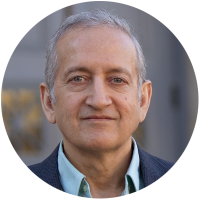
Jainendra Jain pioneered the theory of a new state of matter called the fractional quantum Hall effect, whose discoverers were awarded the Nobel Prize in Physics in 1998. Jain described it as a liquid of certain strange particles that he called composite fermions. Implications for quantum computing based on these long-theorized but experimentally unconfirmed Majorana particles. Learn more about Jainendra Jain and his discovery.

Webb Miller created BLAST programs, which are widely used tools for searching protein and DNA databases for sequence similarities.

Alexander Wolszczan became the first person to discover planets outside our solar system when he used the 1,000-foot Arecibo radio telescope to detect three planets orbiting a pulsar, which is a rapidly spinning neutron star. This discovery opened the door to the current era of planet hunting, and it catapulted the field of extrasolar-planet studies into the forefront of astrophysics.


Jogesh Babu and Eric Feigelson coined the term “astrostatistics," marking a significant shift in how astronomers approach and utilize astronomical data.

The Hobby-Eberly Telescope, one of the world’s largest optical telescopes, was dedicated. The Hobby-Eberly Telescope’s unique and innovative design was developed by Penn State professor Lawrence W. Ramsey, who has served as its project scientist and as the chairman of its board of directors, and Daniel W. Weedman in the early 1980s.

Gordon Garmire conceived of and designed the ACIS X-ray camera, which is used for viewing high-energy objects in the farthest reaches of the universe. The camera is part of the Chandra X-Ray Observatory, which launched on the space shuttle Columbia on July 23, 1999. Penn State also served as the lead institution in building the ACIS X-ray CCD camera for NASA's Chandra X-ray Observatory in the mid-1980s.

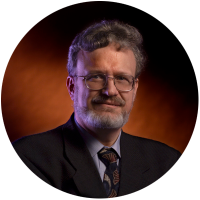
NASA launched the Swift Mission, which included an X-ray telescope developed by John Nousek and Dave Burrows at Penn State. To this date, the mission operations center runs in State College, Pennsylvania. In 2026, a spacecraft will launch to boost Swift to a higher altitude and extend its life.

Ayusman Sen authored the publication that launched the field of self-propelled autonomous nanomotors. Twenty years later, nanomotors—unfathomably small particles that can move autonomously and eventually, hopefully, do helpful things—still feel like a futuristic wonder. But researchers around the world are looking for ways to use them for drug delivery or to fight cancer and a myriad of other applications.

Anton Nekrutenko, the Dorothy Foher Huck and J. Lloyd Huck Chair in Genomics and professor of biochemistry and molecular biology at Penn State, with collaborators James Taylor (Johns Hopkins) and Webb Miller (Penn State) created Galaxy—an open-source, web-based platform for data-intensive biomedical research.

A new material structure proposed by Jorge Sofo, professor of physics and materials science and engineering, helped to unlock the potential of graphene—a thin material known for its exceptional strength, flexibility, electrical and thermal conductivity, and lightness. Graphane has revolutionized materials science with applications in nanotechnology, biomedical engineering, and electronics.


Mauricio Terrones and Joshua Robinson founded the Center for Two-Dimensional and Layered Materials, just one of four such facilities in the country, powering innovations from solar technology to electronics. The center now hosts more than 40 faculty, numerous graduate students, and postdocs across Penn State.

The FDA approved Crisaborole—a nonsteroidal anti-inflammatory drug for treating atopic dermatitis—which was discovered and developed through Penn State chemist Stephen Benkovic’s research at Anacor Pharmaceuticals, a biotech startup he founded that was subsequently acquired by Pfizer and sold as Eucrisa, a topical medication used to treat mild to moderate atopic dermatitis (eczema).

Penn State received a $20 million grant from the National Science Foundation to support the establishment of the National Synthesis Center for Emergence in the Molecular and Cellular Sciences. The center, directed by Ed O'Brien, professor of chemistry, will enable research that explores how complex biological systems, such as cells, emerge from simpler molecules. Findings from the research could eventually inform the development of disease treatments and other applications such as minimizing the negative effects of aging.

An international team of researchers—led by Penn State with Kateryna Makova, Verne M. Willaman Chair of Life Sciences and professor of biology serving as co-senior author of the study—provided a complete sequence of primate genomes that could help advance conservation of endangered ape species and enable a better understanding of human evolution and health.

A study led by Andrew Patterson revealed a new role for a bacterial enzyme in gut metabolism, uncovered the mechanism by which bacteria generate a wide variety of new bile acid species, and showed for the first time that a new type of bile acid appears at birth, coinciding with establishment of the gut microbiome.