
Life Sciences

Person-to-person: Robert Mitchell

Image
Robert Mitchell
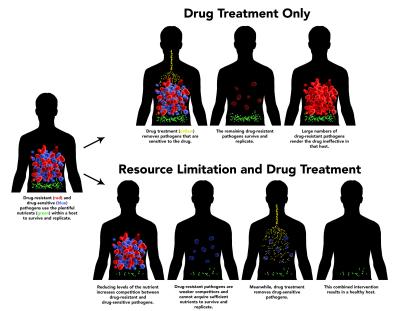
Turning pathogens against each other to prevent drug resistance
Image
Credit: Penn State
Fall 2017 Student Marshal
Image
Andrew Doberstein
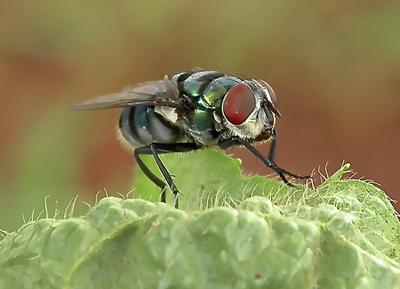
Flies' disease-carrying potential may be greater than thought, researchers say
Image
A study initiated at Penn State’s Eberly College of Science adds further proof to the suspicion that houseflies and blowflies carry and spread a variety of species of bacteria that are harmful to humans. The housefly pictured above was taken in Singapore.
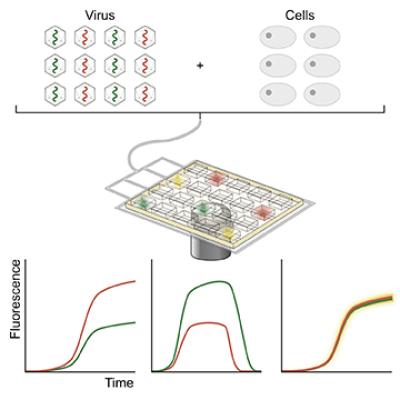
Survival of the least-fit: antiviral drug selectively targets the nastiest viruses
Image
A new microfluidic system allows researchers to study the time-course of a viral infection and the consequences of antiviral intervention in up to 6,400 individual cells simultaneously. Individual cells are infected with a modified virus that produces a green-fluorescent protein that allows the researchers to track the virus’ growth over time by tracking the intensity of green-fluorescent protein in each cell. Credit: Penn State
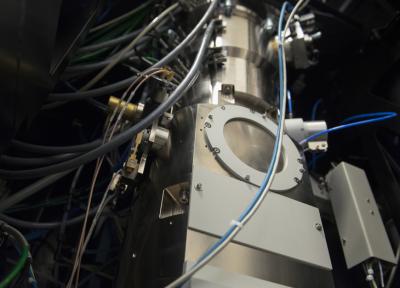
Cryo-electron microscope to bring life sciences and materials sciences together
Image
The FEI Titan/Krios transmission electron microscope, cryo-EM, can image structures down to the atomic level and can provide spectrographs of compounds and elements. Credit: Patrick Mansell
Mimicking biological process, hydrogel signals and releases proteins
Image
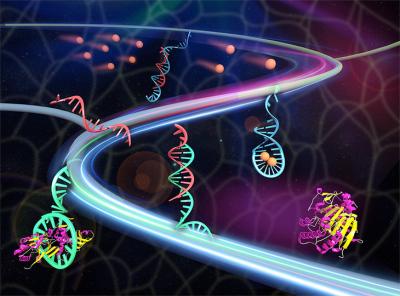
A synthetic tissue releases therapeutic proteins (maroon/yellow) once triggered by metabolites (sandy brown). The metabolites contact with the double-stranded DNA (red/blue) to release the red triggering DNA. The triggering DNA activates the aptamer(cyan)-protein complex to release the protein. Credit: Xin Zou /Jinping Lai / Penn State
Identifying the mechanism for a new class of antiviral drugs could hasten their approval
Image
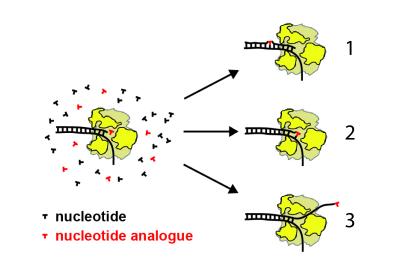
The mechanism of a new class of antiviral drug. The RNA polymerase enzyme (yellow) replicates the virus genome by incorporating one nucleotide (black) at a time. Nucleotide analogues (red) are designed as antiviral drugs that can disrupt the replication process. The antiviral drugs work by (1) incorporating mutations, (2) stopping the replication process, or (3) a newly discovered mechanism in which the RNA polymerase enzyme pauses and then backtracks. Credit: Penn State
Exploring how herpes simplex virus changes when passed between family members
Image
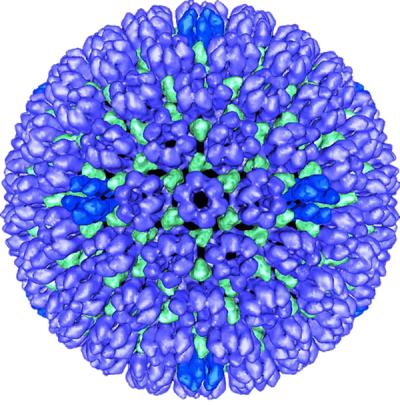
The outer protein shell (procapsid) of the herpes simplex virus type 1 (HSV1). A new study explores how HSV1 might change when passed from one individual to another. This information may provide important insight for future development of therapeutics and vaccines. Credit: Bernard Heymann, Ph.D., NIAMS Laboratory of Structural Biology Research, National Institute of Arthritis and Musculoskeletal and Skin Diseases, National Institutes of Health
Renewable resource: sulfur is used, replenished to produce lipoic acid
Image
Model of the crystal structure of the lipoyl synthase enzyme (LipA) from the bacteria Mycobacterium tuberculosis revealing the destruction of one of its iron-sulfur clusters (orange and yellow balls) to use as a sulfur source for the production of lipoic acid. New research demonstrates that the iron-sulfur cluster that is destroyed during the production of lipoic acid is replaced by an iron-sulfur carrier protein, NfuA, so that LipA can continue to produce lipoic acid. Credit: Booker laboratory, Penn State
Subscribe to Life Sciences