
Simple Model Cell is Key to Understanding Cell Complexity
Image
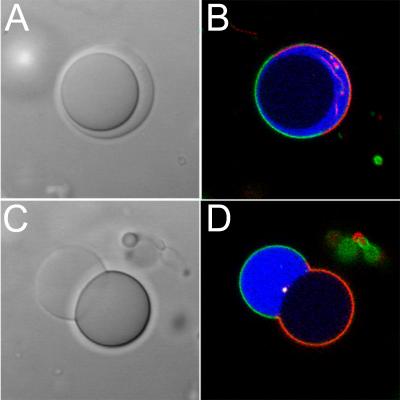
Credit: Christine Keating, Penn State  The model cell developed in the lab of Christine D. Keating at Penn State uses as the cytoplasm a solution of two different polymers, PEG and dextran (Panel A). The image in Panel B is the image in Panel A highlighted with fluorescent dyes.
Physicists Demonstrate How Information Can Escape From Black Holes

Image
Credit: ESA / V. Beckmann (NASA-GSFC)  An artist's depiction of the accretion of a thick ring of dust into a supermassive black hole. The accretion produces jets of gamma rays and X-rays.
Scientists Identify Key Roadblock to Gene Expression
Image
Credit: B. Franklin Pugh, Penn State  In yeast, a nucleosome sits on top of the transcription start site, so RNA polymerase must contend with that nucleosome as soon as it begins to transcribe the gene. In contrast, nucleosomes are positioned further downstream in fruit flies, so transcription starts but then soon pauses at the first nucleosome RNA polymerase encounters.
Global Warming Linked to Caribou-Calf Mortality
Image
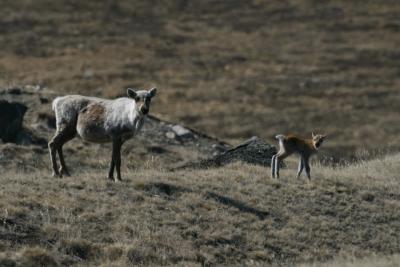
Credit: Eric Post, Penn State  Fewer caribou calves are being born and more of them are dying in West Greenland as a result of a warming climate.
Enzyme Complex Could be Key to New Cancer Treatments
Image
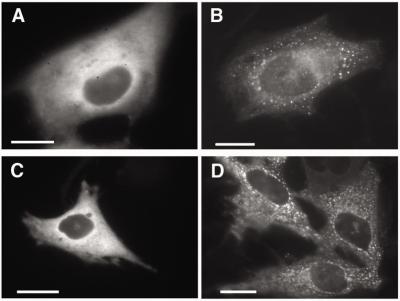
Credit: Erin Sheets lab  In these microscopic images of cells, the white areas indicate the presence of enzymes. The enzymes in images A and C are distributed throughout the cytoplasm because these cells were grown in the presence of purines. In contrast, the enzymes in images B and D occur in small clusters because these cells were grown in the absence of purines.
Gypsy Moth Management Made More Efficient, Cost-Effective
Image
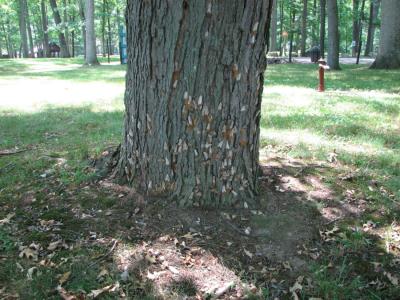
Credit: Katriona Shea, Penn State  Gypsy moth mothers lay their eggs on a tree. Once the young caterpillars are born, they will munch on the tree's leaves and may persist until the entire tree is defoliated.
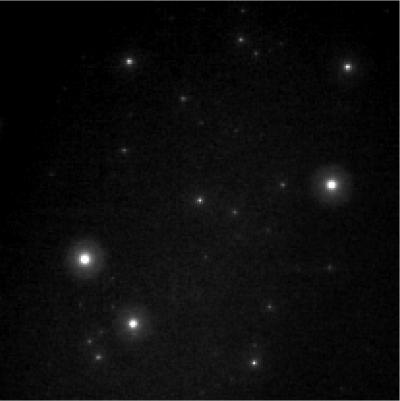
Superbright Explosion is Most Distant Object Ever Visible to the Naked Eye
Image
Credit: Pi of the Sky  GRB 080319B's optical afterglow appears in the center of this image from Pi of the Sky, a Polish group that monitors the sky for afterglows and other short-lived sources.
Scientists See Norwalk Virus' Achilles Heel
Flu Tracked to Viral Reservoir in Tropics
Single-Crystal Semiconductor Wire Built into an Optical Fiber
Subscribe to Research