
New Map Locates Metals in Millions of Milky Way Stars
Image
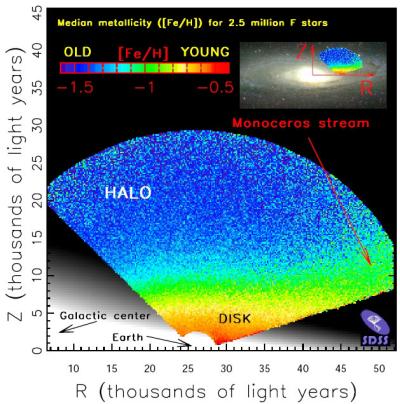
The new metallicity map, shown as the colored inset, indicates that the disk is composed of high-metallicity stars that typically are just a few billion years old (red and yellow shades). Credit: Zeljko Ivezic, University of Washington, SDSS-II Collaboration
Woolly-Mammoth Gene Study Changes Extinction Theory
Image
Penn State University genomicists Webb Miller and Stephan C. Schuster, in front of the Roche / 454 Life Sciences' Genome Sequencer 20 System that was used to sequence mammoth mitochondrial DNA from the hair of 10 woolly mammoths. Credit: Lynn Tomsho, Penn State
A Slimmer Milky Way Revealed by New Measurements
Image
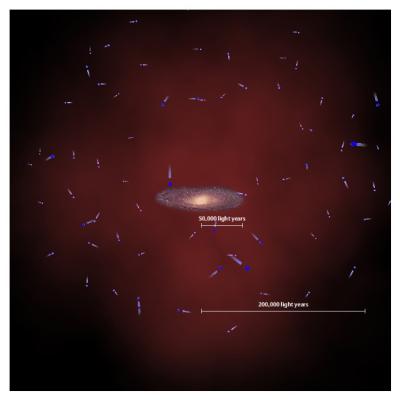
The visible, stellar part of our Milky Way in the middle is embedded into its much more massive and more extended dark matter halo, indicated in dim red. Credit: Axel Quetz, Max Planck Institute for Astrophysics (Heidelberg), SDSS-II Collaboration
A Survivor in Greenland: A Novel Bacterial Species is Found Trapped in 120,000-Year-Old Ice
Image
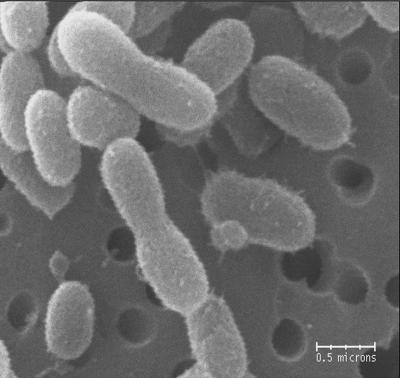
Credit: Penn State  A scanning electron microscope image of the Chryseobacterium greenlandensis bacteria found in a Greenland glacier.
Heart of the Crab Pulsar Probed — First Direct Look Into the Core of a Neutron Star
Image
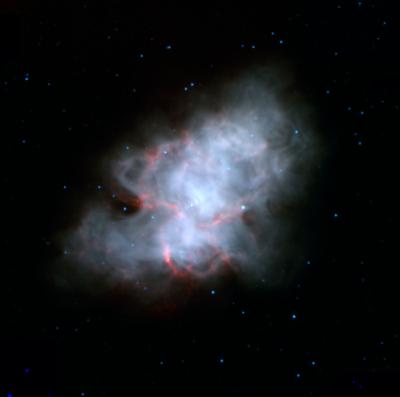
Image Credit: NASA/JPL-Caltech/R. Gehrz (University of Minnesota)  New information about the heart of one of the most famous objects in the sky -- the Crab Pulsar in the Crab Nebula -- has been revealed by an international team of scientists searching for gravitational waves. The team's achievement also is the first direct look into the interior of a neutron star.
NASA's Swift Satellite Catches First "Normal" Supernova in the Act of Exploding
Image
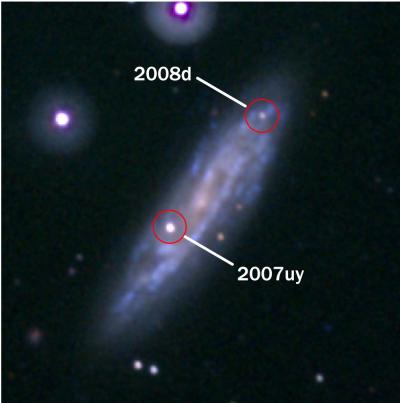
Seemingly out of nowhere, Supernova 2008D burst onto the scene on January 9, 2008, as seen in ultraviolet images (upper right) and X-ray images (beneath) taken by NASA's Swift satellite, giving scientists the unique opportunity to witness the birth of a supernova. CREDIT: NASA Swift team.
Climate Change Does Double-Whammy to Animals in Seasonal Environments
Image
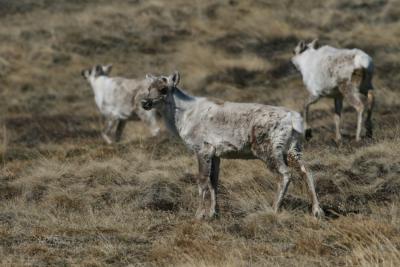
Credit: Eric Post, Penn State  Plant-eating animals like caribou in highly seasonal environments like the Arctic face two climate-related challenges in locating nutritious food. Not only are these animals arriving at their breeding grounds after the plants there have passed their peak nutritional value, but these animals now are less able to find good food by moving their calves to other locations where, prior to global warming, plants had been available later in the season.
Pipsqueak Star Unleashes Monster Flare
Image
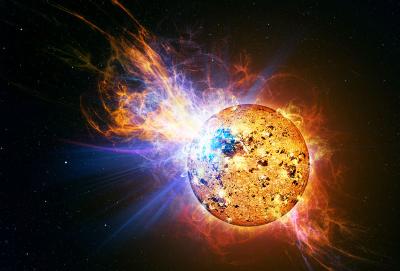
illustration credit: Casey Reed/NASA  An artist's illustration of EV Lacertae, which produced the brightest flare ever seen from a normal star other than our Sun on 25 April 2008.
Team Led by Fisher Receives Conservation Award from Department of the Interior

Image
Charles Fisher
Hundreds of Missing Black Holes Found
Subscribe to Research