
New neuron-like cells allow investigation into synthesis of vital cellular components
Image
The enzyme called FGAMS (red) is expressed in human neuron-like cells, which suggests its involvement in the synthesis of purines, a component of DNA involved in many other cellular and metabolic processes. Using a new method to create synthetic neurons from a readily available cell line, a new study explores the role of FGAMS in creating a multi-enzyme complex called the purinosome, which enables faster production of purines. Credit: Colleen Mangold, Penn State
Researchers map druggable genomic targets in evolving malaria parasite
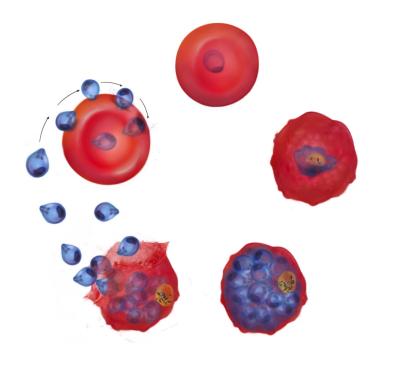
Image
The 48-hour lifecycle of Plasmodium falciparum development in human red blood cells. A team of researchers has used whole genome analysis and chemogenetics to identify new drug targets and resistance genes in the parasite. Credit: Llinás Laboratory, Penn State
Have RNA, will travel: Malaria parasite packs genetic material in preparation for trip from mosquitoes to humans
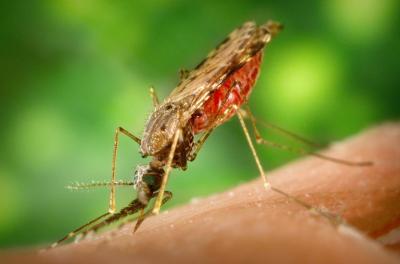
Image
Because the malaria parasite Plasmodium cannot anticipate when it may be transmitted from a mosquito to a mammalian host, it uses specialized poly(A)-binding proteins to package and protect its genetic material for use after transmission. Credit: Centers for Disease Control and Prevention
New research agenda for malaria elimination and eradication

Image
Glass sculptures depict the malaria-causing parasite, Plasmodium falciparum. Credit: Artwork by Luke Jerram, graphic design by Rachel Papernick
Person to person: Matt Keefe
Image
Matt Keefe
Flies' disease-carrying potential may be greater than thought, researchers say
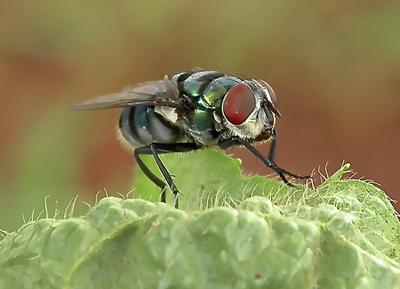
Image
A study initiated at Penn State’s Eberly College of Science adds further proof to the suspicion that houseflies and blowflies carry and spread a variety of species of bacteria that are harmful to humans. The housefly pictured above was taken in Singapore.
Survival of the least-fit: antiviral drug selectively targets the nastiest viruses
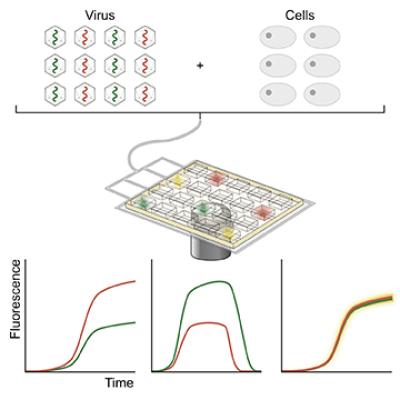
Image
A new microfluidic system allows researchers to study the time-course of a viral infection and the consequences of antiviral intervention in up to 6,400 individual cells simultaneously. Individual cells are infected with a modified virus that produces a green-fluorescent protein that allows the researchers to track the virus’ growth over time by tracking the intensity of green-fluorescent protein in each cell. Credit: Penn State
Cryo-electron microscope to bring life sciences and materials sciences together
Image
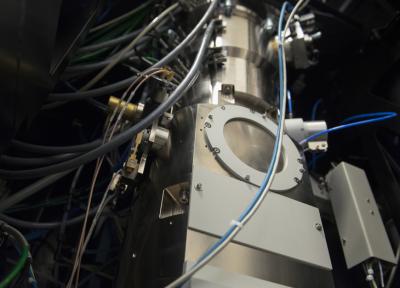
The FEI Titan/Krios transmission electron microscope, cryo-EM, can image structures down to the atomic level and can provide spectrographs of compounds and elements. Credit: Patrick Mansell
Identifying the mechanism for a new class of antiviral drugs could hasten their approval
Image
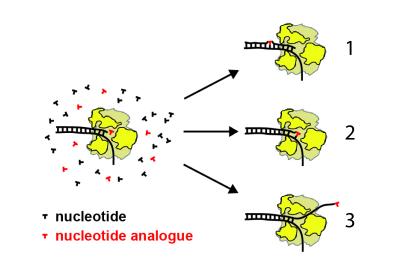
The mechanism of a new class of antiviral drug. The RNA polymerase enzyme (yellow) replicates the virus genome by incorporating one nucleotide (black) at a time. Nucleotide analogues (red) are designed as antiviral drugs that can disrupt the replication process. The antiviral drugs work by (1) incorporating mutations, (2) stopping the replication process, or (3) a newly discovered mechanism in which the RNA polymerase enzyme pauses and then backtracks. Credit: Penn State
Exploring how herpes simplex virus changes when passed between family members
Image
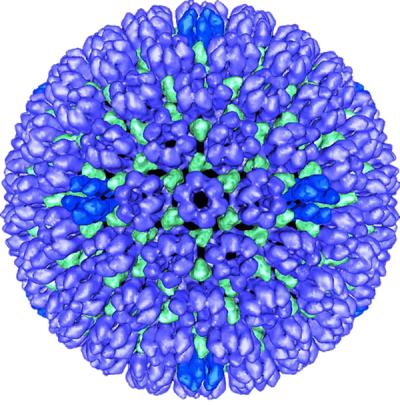
The outer protein shell (procapsid) of the herpes simplex virus type 1 (HSV1). A new study explores how HSV1 might change when passed from one individual to another. This information may provide important insight for future development of therapeutics and vaccines. Credit: Bernard Heymann, Ph.D., NIAMS Laboratory of Structural Biology Research, National Institute of Arthritis and Musculoskeletal and Skin Diseases, National Institutes of Health
Subscribe to Biochemistry and Molecular Biology