How hot are atoms in the shock wave of an exploding star?
Image
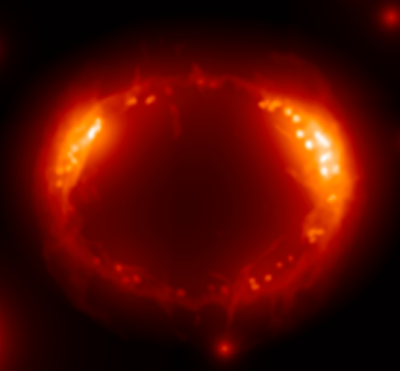
An international team of researchers combined observations of nearby supernova SN1987A, made with NASA's Chandra X-Ray Observatory, with simulations to measure the temperature atoms in the shock wave that occurs from the explosive death of a star. This image superimposes synthetic X-ray emission data onto a density map with from the simulation of SN1987A. Credit: Marco Miceli, Dipartimento di Fisica e Chimica, Università di Palermo, and INAF-Osservatorio Astronomico di Palermo, Palermo, Italy
"Cosmic Messengers from Deep Space Launch a New Era of Discovery" a free public lecture on January 19

Image
Miguel Mostafá
Breakthrough Prize winner Jocelyn Bell Burnell to present Science Achievement Graduate Fellows (SAGF) Lecture January 25

Image
Jocelyn Bell Burnell
Searching the stars

Penn State is growing the global SETI community, looking for intelligent life across the cosmos

2019 Lectures on the Frontiers of Science
Penn State set to lead on new exoplanet science priorities
Image
The Hobby-Eberly Telescope — one of the world’s largest optical telescopes and a premier planet-finding facility, conceived by Penn State astronomers. Credit: Penn State
Summer 2018: About this Photo
Image
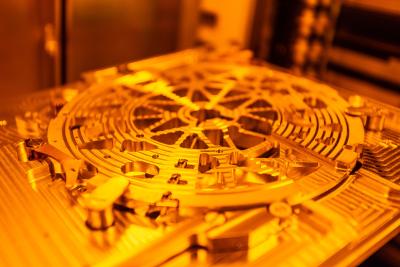
close up of gratings being etched in nanofab lab
Space is the coolest thing in the universe
Image
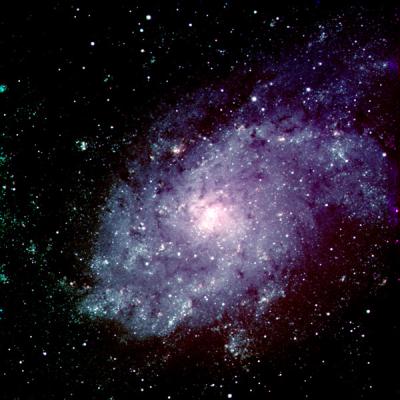
Long Exposure Photo of Galaxy
Reaching out across the generations
Image
AstroFest Shirts
Watching the Detectors
Image
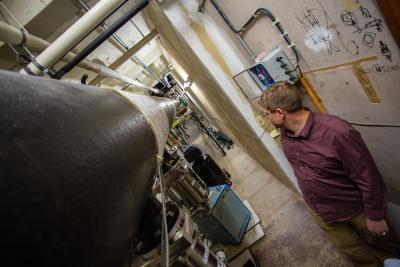
ABE FALCONE, RESEARCH PROFESSOR OF ASTRONOMY and astrophysics, looks down the length of the 47-meter, long-cell X-ray beam in the subbasement of Osmond Laboratory. Credit: Nate Follmer - Penn State.
Subscribe to Astronomy and Astrophysics