
Research Now - Fall 2026




Bird Researchers use Virtual Reality to Bring Fieldwork Experience to Classroom
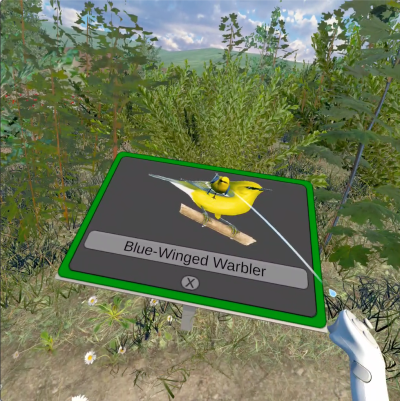
Studying birds in the field, a practice once reserved for scientists, is now possible anywhere in the world thanks to a virtual reality (VR) experience developed by scientists at Penn State. The VR program, named VRmirova, was developed by David Toews, the Louis Martarano Career Development Professor of Biology; initiated by an undergraduate in his lab, Lisa Wang; and conceptualized and advanced in partnership with the Penn State Center for Immersive Experiences.
In the program, participants can approach warblers in the wild, listen to their song, and delicately hold them for closer observation and to take samples. Then, in a virtual lab, learners go through the steps to analyze samples, like extracting and processing genetic material. The free program is a great instructional tool for learners in high school or beyond, according to Toews, who uses the program in a course on campus and at outreach events.
Toews studies how warblers in the genus Vermivora hybridize and swap genes, and how both their genes and diet impact the birds’ colors and patterns. Unfortunately for student researchers, the migratory birds appear in Pennsylvania in the middle of May when students are either taking finals or leaving campus, so they rarely get the opportunity to go into the field.
“It doesn’t replace being able to go outside in the field and do this research, but it’s a close approximation,” Toews said. “It fills a gap for one part of the scientific process that isn’t always accessible for students.”
Move Over Cassette Tapes, Adhesive Tape has Memory, Too
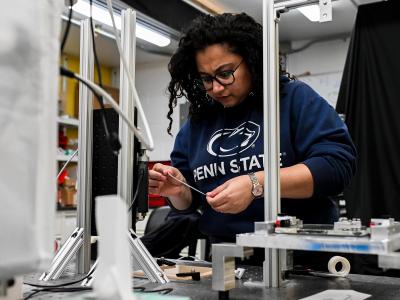
Materials can store information about their past, like a crease in a piece of paper that has been unfolded is a sort of memory of being folded. Now, researchers at Penn State have demonstrated that ordinary adhesive tape has a specialized type of material memory capable of storing a sequence of memories that can be fine-tuned to have different strengths or be erased to make way for new memories.
“Ordinary tape is pressure sensitive,” said Sebanti Chattopadhyay, postdoctoral scholar in physics. “The harder you press it down, the more firmly it adheres to a surface. We found that peeling the tape partway results in a line of strong adhesion at the stopping point that remains when you lay the tape back down. You can then repeat this multiple times by peeling the tape successively shorter distances establishing multiple lines or memories.”
Understanding different types of material memories could lead to devices that could perform simple mechanical calculations, according to the researchers.
“There has long been an interest in developing devices that don’t need electricity and don’t have the same vulnerabilities as electronic computers,” said Nathan Keim, associate professor of physics. “We don’t expect that these devices will be made with adhesive tape, but we are driven by a desire to understand the fundamental science underlying the various types of memories that materials can form and how they might apply in future systems. As this understanding grows, we may find ways to use it that we can’t yet imagine.”
Skeleton ‘Gatekeeper’ Lining Brain Cells Could Guard Against Alzheimer’s
Brain cells called neurons are constantly swallowing material from the fluid that surrounds them—signaling molecules, nutrients, even pieces of their own surfaces—in a process known as endocytosis that is essential for learning, memory, and basic neural upkeep.
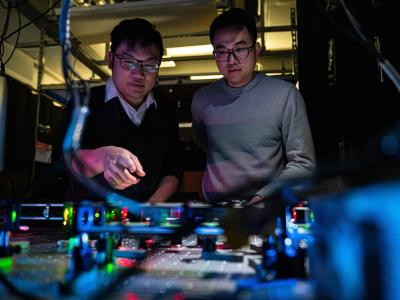
New research has revealed this vital process may be governed by a lattice-like structure just beneath the surface of neurons called the membrane-associated periodic skeleton (MPS). The researchers demonstrated that the MPS structure acts as a physical gatekeeper for nearly every major form of endocytosis, deciding where and when cells can take things in.
“For many, many years we have been trying to understand what kind of machinery helps facilitate this process, because it’s connected to neurodegenerative diseases,” said Ruobo Zhou, assistant professor of chemistry, of biochemistry and molecular biology, and of biomedical engineering.
The researchers created a model to understand the role of the MPS in aging and neurodegenerative diseases. They found that the MPS may serve as a neuroprotective barrier, slowing uptake of amyloid precursor proteins, a key marker of Alzheimer's disease, and helping keep toxic molecules in check. The breakdown of the MPS, already observed in aging and neurodegenerative disease, could tip neurons into a destructive cycle of increased amyloid production and structural decay.
“We think this could open the door for future therapies such as a protein target for neurodegenerative disease treatment,” said Jinyu Fei, graduate student in chemistry. “Preserving or stabilizing the MPS might offer a way to slow the early, hidden cellular changes that precede Alzheimer’s symptoms.”
Strange Cosmic Burst from Colliding Galaxies Shines Light on Heavy Elements
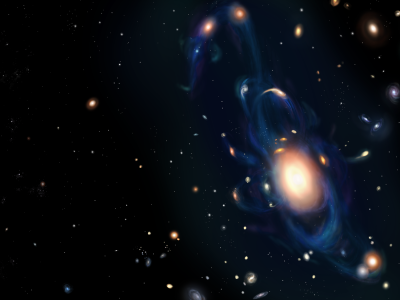
A gamma-ray burst—a type of explosion so powerful it briefly outshines entire galaxies—known as GRB 230906A was likely caused by the collision of two neutron stars, dead remnants of massive stars, hundreds of millions of years ago, according to a new study led by Penn State astronomers.
Using NASA’s Chandra X-ray Observatory and Hubble Space Telescope, the international research team pinpointed the burst to a faint galaxy that appears to be part of a larger group of galaxies about 8.5 billion light-years away. This group is undergoing a cosmic merger, with galaxies colliding and interacting through their gravitational tug on each other.
“This could be an indication that tidal interaction between galaxies can trigger star formation, and two neutron stars that evolve from the new stars can end up merging into each other, making these big explosions and energetic emissions that we observe,” said Simone Dichiara, assistant research professor of astronomy and astrophysics.
The eventual collision not only produced the powerful gamma-ray burst detected by researchers but also scattered newly forged heavy elements into surrounding space.
“We got a rare glimpse into how destruction can be a catalyst for creation,” said Jane Charlton, professor of astronomy and astrophysics. “The gold that we have on Earth was produced in an explosive event of this nature.”