
New faculty fall 2026




The Eberly College of Science welcomes its newest tenure-line faculty members in the departments of Astronomy and Astrophysics, Biology, Chemistry, Mathematics, and Statistics.
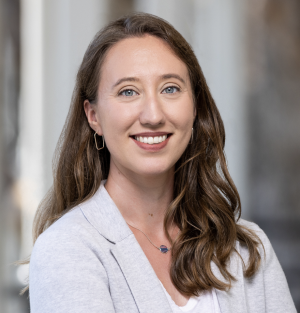
Marta Bryan, assistant professor of astronomy and astrophysics, aims to understand the underlying physical mechanisms for planet formation and evolution. Using telescopes and data from across the world, she studies how gas giants — the biggest, brightest, and most massive planets discovered — form and evolve. Her research program focuses on developing novel observations to probe how fast planets spin, their interior structure, atmospheric dynamics, and magnetism, as well as how Jupiter analogs impact the formation, evolution, and properties of rocky worlds like our own Earth.
Bryan’s previous awards include the American Astronomical Society Annie Jump Cannon Award for outstanding research and promise for future research by a postdoctoral woman researcher in 2023 and the Connaught New Researcher Award in 2023. Her research has been published in journals such as Nature Astronomy, The Astronomical Journal, and The Astrophysical Journal Letters.
Prior to joining the faculty at Penn State, Bryan was an assistant professor at the University of Toronto from 2023 to 2025, a NASA Hubble Fellowship Program Sagan Fellow at the University of California, Berkeley from 2021 to 2022, and a 51 Pegasi b Postdoctoral Fellow at UC Berkeley from 2018 to 2021. She earned her doctorate in astrophysics and her master’s in astrophysics from the California Institute of Technology in 2018 and 2014, respectively. In 2012, she earned her bachelor’s in astrophysics from Harvard University.
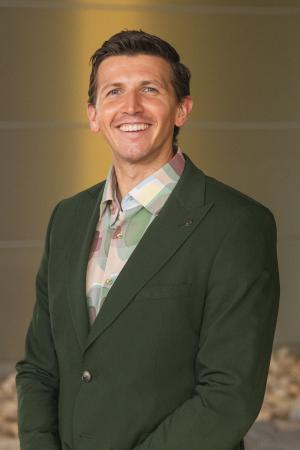
J.J. Zanazzi, assistant professor of astronomy and astrophysics, is a theoretical astrophysicist who specializes in planet formation. His research shows how fluids and gravity work together to assemble planetary systems. The goal of his research is to understand what processes shape the diversity of the geometry of objects in space, from orderly packings of circular and co-planar small planets close to their host star, to large gas giants whose eccentric trajectories misaligned with their host stars imply violent pasts.
Zanazzi’s previous awards include a 51 Pegasi b Postdoctoral Fellowship at UC Berkeley and Penn State and a David Crighton Fellowship from the University of Cambridge. Zanazzi’s work has been published in journals such as The Astrophysical Journal, Monthly Notices of the Royal Astronomical Society, and Astronomy & Astrophysics.
Prior to joining the faculty at Penn State, Zanazzi was a 51 Pegasi b Postdoctoral Fellow at Penn State from 2025 to 2026 and at UC Berkeley from 2022 to 2025, a research associate at the University of Toronto from 2021 to 2022, a postdoctoral fellow at the University of Toronto from 2018 to 2021, and a David Crighton visiting postdoctoral fellow at the University of Cambridge in 2019. He earned his doctoral degree in theoretical astrophysics from Cornell University in 2018 and his bachelor’s in physics and astronomy and mathematics from Northern Arizona University in 2013. He spent his undergraduate fall semester of 2011 at Penn State in the Mathematics Department, where he participated in the Mathematics Advanced Study Semesters program.

Patrick Drew, professor of biology and associate director of the Huck Institutes of the Life Sciences, uses optical microscopy in rodents to study how blood flow to the brain is regulated during sleep and across attentive states. He is also interested in understanding the neurobiology of dreaming.
Drew’s previous awards include a W. M. Keck Foundation Medical Research Grant, McKnight Endowment for Neuroscience Scholar Award, the Penn State Neuroscience Institute Mentoring Award, and the Collaborative Research Team award from the Penn State College of Medicine in 2025. He is a fellow of the American Institute for Medical and Biological Engineering. His research has been published in journals such as Nature Neuroscience, Neuron, Nature Methods, and Proceedings of the National Academy of Sciences.
Prior to joining the faculty at Penn State, Drew was a postdoctoral fellow at the University of California, San Diego, from 2004 to 2010. Drew earned his doctoral degree in neuroscience from Brandeis University in 2004 and his bachelor’s in biology from the California Institute of Technology in 1999.
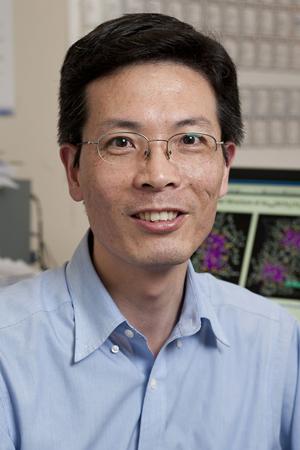
Rongchao Jin, Eberly Family Distinguished Chair in Science and professor of chemistry, studies the synthesis of atomically precise nanoparticles. His research has led to the establishment of the methods for these nanoparticles, and these new methods allowed for increased research opportunities in fundamental studies. The new types of nanoparticles with atomic precision hold potential in optics, catalysis, energy conversion, optoelectronics, quantum technology, and sensing applications.
Jin’s previous awards include the Charles E. Kaufman New Initiative Grant in 2023, the U.S. National Science Foundation Creativity Award in 2020, and the International Precious Metals Institute Student Advisor Award in 2019. His research has been published in journals such as Science, Journal of the American Chemical Society, Chemical Reviews, and Nature.
Prior to joining the faculty at Penn State, Jin was a professor of chemistry at Carnegie Mellon University from 2006 to 2026. He was previously a postdoctoral research associate at the University of Chicago from 2003 to 2006, and in 2023 he earned his doctoral degree in chemistry from Northwestern University.
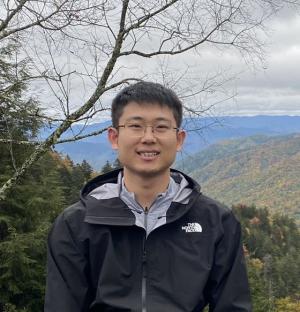
Quanjun Lang, assistant professor of mathematics, develops mathematical and data-driven methods to understand complex systems that evolve over time. He is particularly interested in learning the underlying rules of a system from observed data — for example, how individual components interact, how past behavior influences future dynamics, or how complex physical systems can be modeled and predicted. His work combines ideas from applied mathematics, machine learning, and scientific computing, with applications ranging from interacting particle systems to quantum dynamics.
Lang’s previous awards include the Lewis Blake Award for Excellence in Teaching from Duke University. His research has been published in journals such as SIAM Journal on Scientific Computing, Journal of Machine Learning Research, and SIAM Journal on Mathematics of Data Science.
Prior to joining the faculty at Penn State, Lang was the William W. Elliott Assistant Research Professor of Mathematics at Duke University from 2023 to 2026. He earned a doctoral degree in mathematics from Johns Hopkins University in 2023 and a bachelor’s in mathematics and applied mathematics from Sun Yat-sen University in 2017.
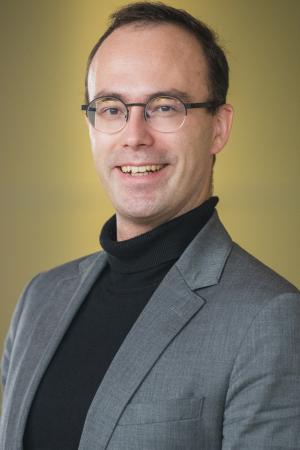
Karol Bacik, assistant professor of mathematics, is an applied mathematician who uses mathematical models to describe complex systems with many interacting components. He models systems from the physical, social, and political sciences, including the migration of sand dunes and the motion of human crowds. He works closely with collaborators who collect data on various systems and conducts fluid dynamics experiments to describe the foundations of these systems.
Bacik’s previous awards include the 2023 Andreas Acrivos Dissertation Award from the American Physical Society. His research has been published in journals such as Physical Review Letters, Physics, and the Proceedings of the National Academy of Sciences.
Prior to joining the faculty at Penn State, Bacik was an instructor of mathematics at the Massachusetts Institute of Technology from 2023 to 2026 and a research associate at the University of Bath from 2021 to 2023. Bacik earned his doctoral degree in applied mathematics from the University of Cambridge in 2021, his Master of Advanced Studies from the University of Cambridge in 2017, and his bachelor’s in mathematics from Imperial College London in 2016.
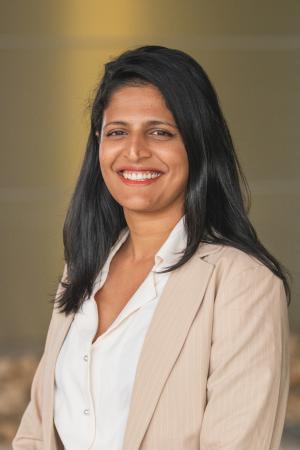
Aarya Patil, assistant professor of astronomy and astrophysics and statistics is a co-hire of the Penn State Institute for Computational and Data Sciences. She develops data-driven methods to study stars, the Milky Way, and other galaxies, with the goal of understanding how galaxies form and evolve in the Universe. Her research, which sits at the intersection of statistics, astronomy, and computer science, builds methods to help extract new physical insights from very large datasets produced by modern astronomical surveys.
Patil co-leads the Astropy Project, one of the largest and most widely used open-source software projects in astronomy, providing foundational software used by astronomers around the world. In 2025, the Astropy Collaboration received the Lancelot M. Berkeley–New York Community Trust Prize for Meritorious Work in Astronomy from the American Astronomical Society. Her work with Astropy has also been recognized with the 2023 Institute of Physics Publishing Top Cited Paper Award. Her research has been published in journals such as The Astronomical Journal, Monthly Notices of the Royal Astronomical Society, and Astronomy & Astrophysics.
Prior to joining the faculty at Penn State, Aarya was a Legacy Survey of Space and Time Discovery Alliance Catalyst Fellow at the Max Planck Institute for Astronomy from 2023 to 2026 and served as an ambassador for the Vera C. Rubin Observatory in Chile. She earned her doctoral degree in astronomy and astrophysics in 2023 from the University of Toronto and her Bachelor of Engineering in computer engineering from S. P. Pune University in 2018.
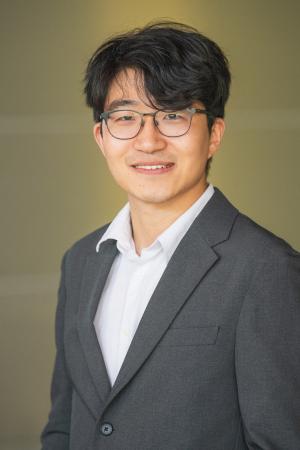
Ye Tian, assistant professor of statistics, studies transfer learning or how borrowing useful information from related datasets to improve prediction, reliability, and interpretability, can uncover scientific insights that might be missed when each dataset is analyzed alone. In genetics, for example, it can help predict disease risk across different populations; in autonomous driving, it can help adapt a driver-assistance system developed for one environment to another. His research develops more reliable and interpretable transfer-learning methods, provides theory to explain when existing methods work, and identifies their fundamental bottlenecks.
Tian has published many R software packages for various statistical methods. His research has been published in journals such as the Journal of the American Statistical Association, the Journal of Machine Learning Research, and Statistics in Medicine.
Prior to joining the faculty at Penn State, Tian was a postdoctoral associate at Yale University from 2025 to 2026. He earned a doctoral degree in statistics from Columbia University in 2025 and a bachelor’s in statistics from the University of Science and Technology of China in 2019.