
"A life changing experience"




For over a decade, students at Penn State University Park have studied abroad in Africa to gain hands-on experience learning about ecology and human-environment interaction. However, these experiences are far more than just a brief safari to Tanzania or Kenya, where you can view the wildlife from a distance.
Students enrolled in BIOL 497: African Savannah Biology or BIOL 489: Biology of Ecohealth in Tanzania, are immersed for two to three weeks in the African savannah, not only experiencing the wildlife that the region has to offer but also meeting and learning from the indigenous people of the region.
In 2022, Peter Hudson, Williman Professor of Biology, began offering his African Savannah Biology short-term program. “I saw my course as a win-win opportunity,” shared Hudson, “first, the course would benefit Penn State students by giving them the opportunity to experience hands-on science, and secondly, to benefit the Masai people of the Masai Mara, where half of the profits earned by the camp the course stays at go to supporting the education of local girls.”
Recently, Hudson was given the Lifetime Achievement Award from Penn State Global, recognizing his exceptional achievement towards furthering Penn State's global engagement goals across his career.
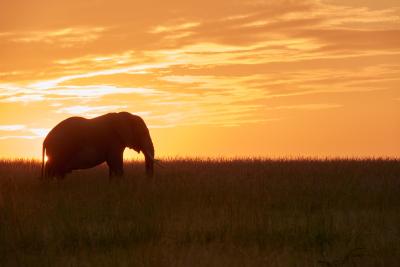
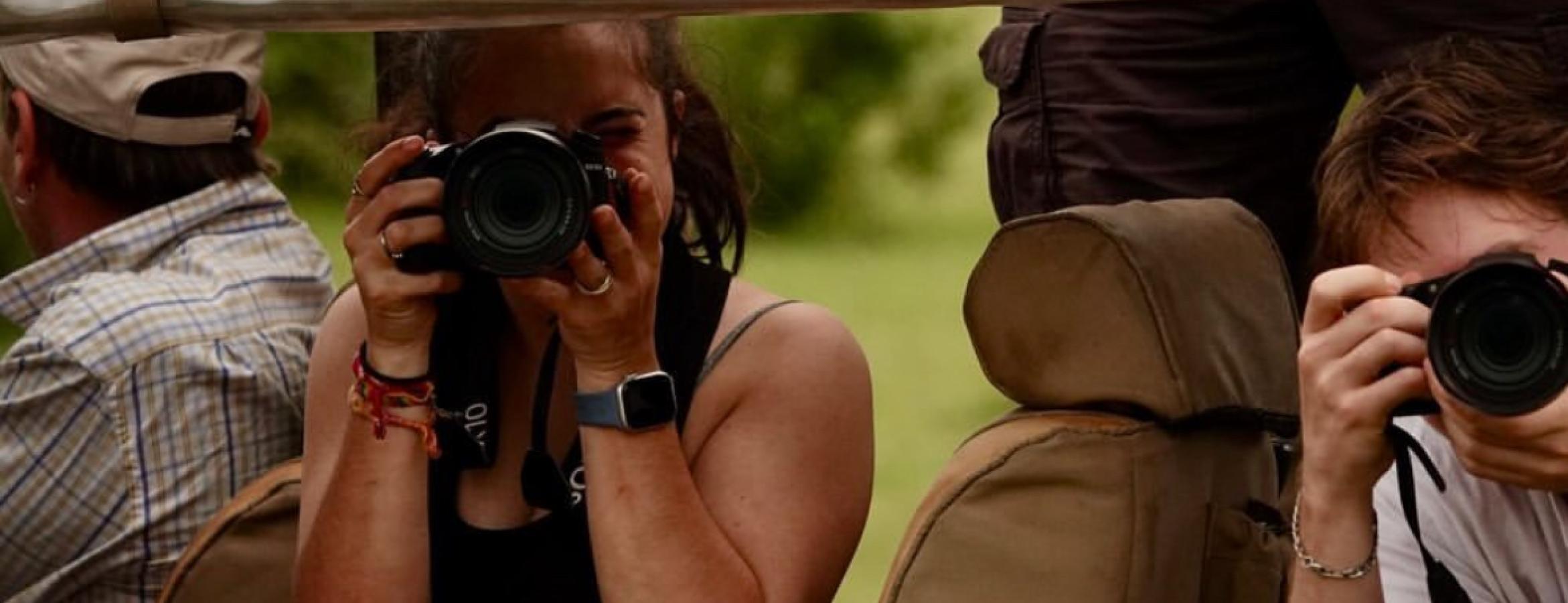
Hudson’s course, which departs near the end of December and returns in early January before classes start, takes students on an immersive journey through the Masai Mara, a large game reserve in southern Kenya. Students use a mixture of observation and photography, something Hudson himself is passionate about, to further their understanding of savannah wildlife behaviors and interactions. While collecting data for their research projects, students work hand-in-hand with the Masai people, who guide the students in finding the animals. By the end of their time at the reserve, students have not only deepened their knowledge of animal behaviors but also their cultural understanding of the Masai way of life.
Samantha Kratman, a biology student who took Hudson’s course in 2024, shared that, “learning about the intricacies of how people and the environment interact through observation, and not a lecture or textbook, was one of the major impacts this course had on me and my perspective.”
However, these courses aren’t just for biology students. Luc Shrauf, a physics student who took Hudson’s course in 2023, said, “I knew I wanted to study abroad while in college, but as a physics student, there were only a few study abroad options for upper-level physics courses, so I decided to step outside of my comfort zone and enroll in a biology course. After Peter’s course, I gained so much perspective on my life, research, and academics.”
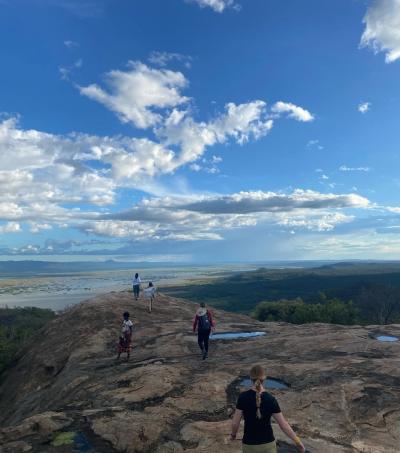
Nearly a decade before Hudson’s course launched, in 2013, Douglas Cavener, Distinguished Scholar in Genetics and professor of biology, and Paul Shaffner, instructor of biology, created the Biology of Ecohealth in Tanzania. Cavenar and Shaffner’s class takes students to Tanzania in May and June, after spring classes have ended. For three weeks, the class travels through Tanzania, which is about the size of Texas and Oklahoma combined. The class visits a veritable variety of locations, including West Kilimanjaro, the Serengeti National Park, and the Ngorongoro Conservation Area where they encounter elephants, giraffes, lions, hippos, wildebeest, baboons, and a cornucopia of other wildlife in their natural habitat.
Additionally, students also have the opportunity to camp for three days with the Hadza, one of the last hunter-gatherer groups, and to meet the Masai people, a Nilotic ethnic group that lead a pastoralist lifestyle. Students also visit the Endulen hospital in northern Tanzania, a remote facility that serve indigenous people.
“As a premed student, one of the most impactful moments while abroad was visiting the Masai hospital,” said Abigail Davis, a biology student on the premed track who took Cavener’s course in 2025. “Seeing the passion for medicine and helping people that the staff there have, ignites something within yourself. It’s who I want to be in the future.”
Throughout the course, students also work in groups on a research project where they observe, describe, and analyze animal behaviors.
“The primary goal of the course is for students to observe and interact with the diverse groups of Tanzanian people and the rich diversity of wildlife and to reflect on the ecohealth of all components,” said Cavener. “Many times, the students who take this course often come away with desires to study rural or international health because of the experiences this course provides.”
Students who are interested in studying abroad can contact Joel Waters, the coordinator of education abroad and international programs in the Office of Undergraduate Students, to talk about their options.
“My job is to help students find pathways abroad,” shared Waters. “For science students in particular, I collaborate with their academic adviser to map out international programs that will fulfill degree requirements and keep them on track for graduation. Students interested in starting their global journey can make an appointment with me on Starfish or speak with one of the science abroad ambassadors.”
These courses have lasting impacts for those who go, even after they graduate. Ashley Bolds, who graduated from Penn State in 2023 with degrees in biochemistry and molecular biology and microbiology, and who took Cavener’s course in 2022, shared, “I remember crying when I was accepted to the program with funding; it’s been years since I went, and I still remember the trip like it was yesterday.” Bolds currently works as a distinguished postbaccalaureate researcher at the National Institute of Diabetes and Digestive and Kidney Diseases at the NIH and will be applying to medical school soon.
“Going abroad to Tanzania was my first experience traveling internationally. I didn’t even have a passport before the trip! After the course, I immediately knew I wanted to keep traveling, so I enrolled in a full semester abroad in Australia and New Zealand. Doug’s course helped me discover my love for traveling, and now as I begin to apply for medical school, I know that I want to focus on global health in my studies.”