
New faculty fall 2025




The Eberly College of Science welcomes its newest tenure-line faculty members in the departments of Astronomy and Astrophysics, Biology, Chemistry, Mathematics, and Physics.
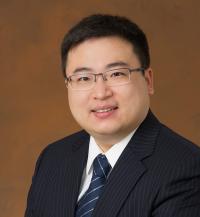
Renyu Hu, associate professor of astronomy and astrophysics, investigates the atmospheres, climates, and evolution of plants and exoplanets, with the goal of identifying and characterizing potentially habitable environments within and beyond the solar system. He combines advanced numerical modeling with measurements from telescopes and satellites to study planetary atmospheres within and beyond our solar system. He also leads James Webb Space Telescope programs that deliver groundbreaking observations of rocky and low-temperature worlds. His planetary atmosphere models also help define the measurements needed for NASA’s future missions, including the Habitable Worlds Observatory.
Hu has received the Jet Propulsion Laboratory Edward Stone Award for outstanding research contributions and NASA’s Early Career Public Achievement Medal. He currently serves on the Executive Committee of NASA’s Exoplanet Exploration Program Analysis Group. His research has been published journals such as Nature Geoscience, the Astrophysical Journal, and the Astronomical Journal.
Prior to joining the faculty at Penn State, Hu was a scientist at the NASA Jet Propulsion Laboratory in California from 2015 to 2025, where he supervised the Exoplanet Systems group. He was a NASA Hubble Fellow from 2013 to 2015. He earned a doctoral degree in planetary sciences at the Massachusetts Institute of Technology in 2013, a master’s degree in astrophysics at Tsinghua University in China in 2009, a Diplôme d’Ingénieur at École Centrale Pairs in 2009, and a bachelor’s degree in mathematics and physics at Tsinghua University.
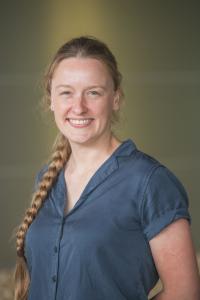
Charlotte Ward, assistant professor of astronomy and astrophysics, studies the formation and growth of supermassive black holes using time- detect flares and variability from distant objects. Her research focuses on developing computational techniques for joint analysis of data from ground and space-based telescopes and applying those techniques to understand how black holes accrete, or accumulate, gas and stellar material, growing over time.
In addition, Ward is passionate about outreach and equity. In 2024 she was awarded the Equity Prize for Outreach by the Department of Astrophysical Sciences at Princeton University. Her research has been published in journals such as Nature Astronomy, the Astrophysical Journal, and the Monthly Notices of the Royal Astronomical Society.
Prior to joining the faculty at Penn State, Ward was a postdoctoral research associate at Princeton University where she worked closely with the Vera C. Rubin Observatory software team. She earned a doctoral degree in astronomy at the University of Maryland at College Park in 2022, and a bachelor’s degree in physics and mathematics at the University of Sydney in Australia in 2016.

John Majoris, assistant professor of biology, studies the dispersal of coral larvae. In coral reef ecosystems, tiny larvae develop for several days up to a few months before settling in costal habitats. Through his work, studying dispersal traits and larval behaviors, Majoris explores the consequences of coral dispersal processes on the ecology, evolution, and conservation of reef associated species.
Majoris also has given many scientific outreach talks including talks on, “How do reef fish larvae find their way home?” and “Everything you need to know about clownfish.” His research has been published in journals such as PNAS, Proceedings of the Royal Society B, Aquaculture, and Marine Biology.
Prior to joining the faculty at Penn State, Majoris was an assistant professor of marine biology at Texas A&M University Corpus Cristi from 2023 to 2025. He was also a research scientist and postdoctoral fellow at the University of Texas Austin Marine Science Institute from 2021 to 2023, a postdoctoral fellow at King Abdullah University of Science and Technology in Saudi Arabia from 2019 to 2021, and a postdoctoral associate at Boston University from 2017 to 2018. Majoris earned a doctoral degree in biology at Boston University in 2017 and a bachelor’s degree in marine biology and aquaculture at the Florida Institute of Technology in 2009.
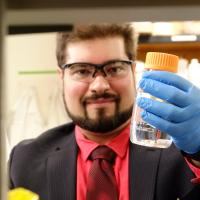
Juan Manuel Vazquez, assistant professor of biology, investigates the evolution of longevity and health span in bats and whales. His work focuses on answering interdisciplinary questions on aging using cellular and molecular biology, comparative evolutionary genomics, and population genomics. Using this methodology allows him not only to identify genes and gene-regulatory pathways associated with the evolution of longevity, but also, how the mechanisms behind these findings work within the cell.
Vazquez received a Maximizing Opportunities for Scientific and Academic Independent Careers (MOSAIC) postdoctoral career transition award to promote diversity from the National Institutes of Health in 2024 and a National Science Foundation Postdoctoral Research Fellowship in Biology to study the evolution and genomics of longevity in 2021. His research has been published in journals such as Science, Nature Communications, Cell Reports, and BMC Biology.
Prior to joining the faculty at Penn State, Vazquez was a postdoctoral researcher at the University of California, Berkeley from 2020 to 2025. He earned a master’s and doctoral degrees in human genetics at the University of Chicago in 2020, and bachelor’s degrees in biology, molecular genetics and chemistry at the University of Rochester in 2015.

Kyan D’Angelo, assistant professor of chemistry, focuses on strategies to synthesize structurally complex organic compounds, which are compounds with large and intricate arrangements of atoms. The synthesis of target compounds with interesting three-dimensional architectures or unusual atomic arrangements plays a critical role in discovering organic compounds that address major societal challenges, especially in human health. He develops new methods that simplify the synthesis of these compounds, including molecules originally discovered in natural sources such as plants and fungi, with an emphasis on those showing promise as disease treatments.
D’Angelo is also enthusiastic about the many opportunities to work across disciplines, as the ability to synthesize organic compounds of interest to the broader academic community at Penn State opens various avenues for unique collaboration. His research has been published in journals such as Science and the the Journal of the American Chemical Society.
Prior to joining the faculty at Penn State, D’Angelo was a postdoctoral researcher at the University of California, Berkeley from 2022 to 2025. He earned a doctoral degree in chemistry at the Massachusetts Institute of Technology in 2022, and a bachelor’s degree in chemistry and biochemistry and a master’s degree in chemistry at the University of Toronto in Canada, in 2014 and 2015, respectively.

Yi Liu, assistant professor of chemistry, integrates organic synthesis, protein engineering, and organometallic chemistry to design biocatalytic strategies for challenging bond formations. By bridging protein engineering with synthetic method development, her lab aims to broaden the applications of biocatalysis in chemical synthesis.
Liu previously received the Pall Dissertation Award for research excellence from the Department of Chemistry at McGill University. Her work has been published in journals such as Science, Journal of the American Chemical Society, Angewandte Chemie International Edition, and Chemical Sciences.
Prior to joining the faculty at Penn State, Liu was a postdoctoral researcher at Princeton University from 2023 to 2025, and at Cornell University from 2021 to 2023. She earned a doctoral degree in chemistry at McGill University in 2021, a master’s in chemistry at Memorial University of Newfoundland in 2016, and a bachelor’s in chemistry at Xiangtan University in China in 2013.
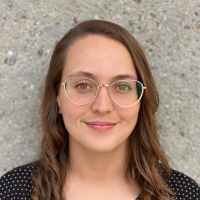
Carly Schissel, assistant professor of chemistry, is interested in the intersection of chemistry and biology. By focusing on the discovery, design, and synthesis of bioactive peptides, strings of amino acids that form proteins, with unusual amino acids and structures she aims to create novel peptides with therapeutic potential. Her research explores how these unusual structures can bestow new functions on peptides, ultimately pushing the boundaries of drug discovery and the understanding of bioactive molecules.
Schissel’s previous awards and honors include a Miller Institute Research Fellowship, where she focused on developing peptide backbone editing reactions, including the substitution of canonical amide bonds with carbon-carbon bonds. Her research has been published in journals such as Science, Journal of the American Chemical Society, and Nature Chemistry.
Prior to joining the faculty at Penn State, Schissel was a Miller Fellow at the University of California, Berkeley from 2022 to 2025. She earned a doctoral degree in chemistry at the Massachusetts Institute of Technology in 2022 and a bachelor’s degree in chemistry at Williams College in Massachusetts in 2016.

Jonathan DeWitt, assistant professor of mathematics, specializes in the area of dynamical systems—mathematical models that describe how a system changes over time. In particular, he is interested in understanding the chaotic behavior in dynamical systems, where the system is deterministic but unpredictable in the long term due to sensitivity to initial conditions such as in the Butterfly Effect. Such behavior often manifests in strong statistical properties of the system. For example, almost all particles in the system in the system will, in the long run, spend the same proportion of their time in each region of the system.
DeWitt’s previous awards include a National Science Foundation Postdoctoral Fellowship in 2022 and a Wirszup Prize from the University of Chicago, also in 2022. His research has been published in journals such as Journal of Modern Dynamics, Journal of the European Mathematical Society, and Geometric and Functional Analysis.
Prior to joining the faculty at Penn State, DeWitt was a postdoctoral fellow at the University of Maryland from 2022 to 2025. He earned a doctoral degree in mathematics at the University of Chicago in 2022 and a bachelor’s in mathematics and computer science at Haverford College, in Pennsylvania, in 2016.
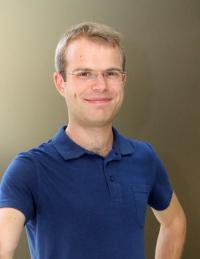
Peter Hintz, professor of mathematics, focuses on solving partial differential equations that arise in general relativity. His work mainly concerns the Einstein field equations, which describe the geometry of spacetime and the distribution of matter in the universe. In particular, he studies the stability properties of black hole spacetimes and works on precise descriptions of mergers and of the scattering of black holes. Mathematically speaking, this requires a detailed analysis of wave propagation on curved spacetimes, how waves change behave when spacetime is curved, including the regularity and decay properties of gravitational waves.
Hintz’s previous awards and honors include an International Association of Mathematical Physics Early Career Award in 2024 and a Frontiers of Science Award from the International Congress of Basic Science in 2023. In 2022, Hintz was an invited speaker at the International Congress of Mathematicians and a plenary speaker at the 20th International Congress on Mathematical Physics. His research has been published in journals such as Acta mathematica, Inventiones mathematicae, and Physical Review Letters.
Prior to joining the faculty at Penn State, Hintz was an associate professor of mathematics and physics at ETH Zürich from 2021 to 2025 and an associate and assistant professor at the Massachusetts Institute of Technology from 2021 to 2022 and 2019 to 2021, respectively. He was also previously a Clay Research Fellow at the Clay Mathematics Institute from 2017 to 2020 and a Miller Research Fellow at the University of California, Berkeley, from 2015 to 2017. He earned a doctoral degree in mathematics at Stanford University in 2015 and a bachelor’s degrees in mathematics and physics at the University of Göttingen, in Germany, in 2011.
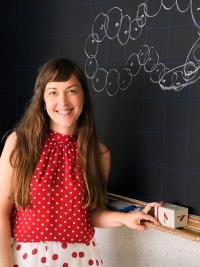
Sara Kalisnik Hintz, associate professor of mathematics, develops and applies topological methods to analyze data from a variety of disciplines, including biology, medicine, and computer science. These methods either measure the shape of a dataset — for example, by detecting connected components, loops, or higher-dimensional topological features — or build visually interpretable combinatorial representations of data out of simple building blocks. One of the methods that Kalisnik Hintz uses in her work is persistent homology, which tracks the appearance and disappearance of topological features across multiple scales and can be combined with statistical or machine-learning methods for tasks such as classification. She has applied persistent homology to problems ranging from the automatic classification of teeth and tooth decay in X-ray images to the analysis of patterns in the spread of antimalarial drug resistance.
Kalisnik Hintz’s previous awards include the Polya Teaching Fellow Award from Stanford University, which recognized her outstanding teaching during her time at Stanford. Her research has been published in journals such as Foundations of Computational Mathematics, Algebraic & Geometric Topology and Journal of Pure and Applied Algebra.
Prior to joining the faculty at Penn State, Kalisnik Hintz was a Senior Scientist at ETH Zurich from 2021 to 2025, an assistant professor of mathematics at Bently University, in Massachusetts, from 2020 to 2021, and an assistant professor of mathematics at Wesleyan University, in Connecticut, from 2018 to 2020. She was also a postdoctoral researcher at the Max Planck Institute for Mathematics in the Sciences, in Leipzig, Germany, from 2017 to 2018 and a postdoctoral research associate in mathematics at Brown University, in Rhode Island from 2016 to 2017. She earned a doctoral degree in mathematics at Stanford University, in California in 2016 and a diploma in mathematics at the University of Ljubljana, in Slovenia, in 2009.

Peter Morfe, assistant professor of mathematics, studies partial differential equations, probability, and stochastic processes. One of the main focuses of his work concerns simplified mathematic models of materials that have internal variation, called heterogeneous media, and how their various components interact. The goal of this work is to explain and understand the mathematics that underlies the physical phenomena.
Morfe’s previous awards and honors include a National Science Foundation Mathematical Sciences Postdoctoral Research Fellowship in 2022. His research has been published in journals such as the Journal of Functional Analysis, Interfaces Free Boundaries, and the Journal of Statistical Physics.
Prior to joining the faculty at Penn State, Morfe was a postdoctoral fellow and an NSF postdoctoral fellow at the Max Planck Institute for Mathematics in the Sciences, in Leipzig, Germany, from 2022 to 2025. He earned doctoral and master’s degrees in mathematics at the University of Chicago in 2022 and 2018, respectively, and a bachelor of engineering in electrical engineering at Cooper Union, in New York, in 2016.
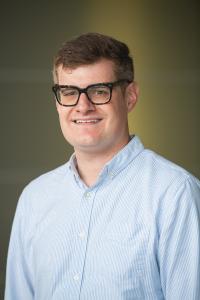
Thomas Iadecola, associate professor of physics, is a co-hire of the Penn State Institute for Computational and Data Sciences and a member of the Materials Research Institute. His research uses a diverse analytical and numerical toolkit to study the novel properties that emerge when many quantum particles interact strongly with one another. His main research interests include out-of-equilibrium quantum systems, which have not yet reached a steady state, and topological phases, which can only be distinguished by global properties. Both of these topics are relevant to emerging quantum technologies, including quantum computing, that will benefit from improved understanding of such systems.
Iadecola’s previous awards and honors include an NSF CAREER award in 2022 and an Iowa State University Award for Early Achievement in Research in 2023. His research has been published in journals such as Nature, Nature Physics, Physical Review Letters, and Physical Review B.
Prior to joining the faculty at Penn State, Iadecola was an assistant and associate professor of physics and astronomy at Iowa State University from 2019 to 2025 and a Joint Quantum Institute Theoretical Postdoctoral Fellow at the University of Maryland from 2017 to 2019. He earned a doctoral degree in physics at Boston University in 2017 and a bachelor’s degree in mathematics-physics at Brown University, in Rhode Island, in 2012.