
2025: Year of Quantum
How physics at the smallest scales impacts materials, human health, computing, communications and more
The 2025 Frontiers of Science lecture series celebrates 100 years of quantum mechanics and the UNESCO International Year of Quantum Science and Technology with six lectures on consecutive Saturdays that explore the depth and breadth of quantum research at Penn State and beyond.
“Public interest technologists and the battle for privacy in the quantum age”
January 25, 2025
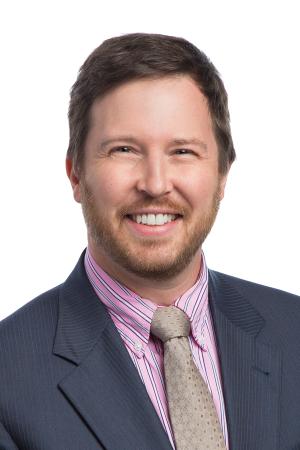
Presented by Sascha Meinrath
Palmer Chair in Telecommunications in the Donald P. Bellisario College of Communications at Penn State and director of X-Lab
Ben Franklin presciently warned: “Those who would give up essential liberty, to purchase a little temporary safety, deserve neither liberty nor safety.”
The Internet has created unprecedented communications opportunities, as well as myriad and growing worries over privacy-invasive and data-exfiltration practices by hackers, corporations, and law enforcement. These concerns have proven prescient, as exemplified by the October 2024 report by the Wall Street Journal that the surveillance system used by US law enforcement had itself been compromised. This hack -- potentially the largest in U.S. history – likely surveilles the communications of hundreds of millions of Americans, covering e-mail, phone calls, text messages, and much more. Nicknamed "Salt Typhoon," the hack has proven intractable; and, in December 2024, the FBI took the unprecedented step of issuing a public warning that Americans should encrypt their communications to prevent active surveillance by foreign powers. However, this "solution" may itself be a momentary salve, with quantum computing likely to break standard encryption as the technology matures.
This talk explains how contemporary technological crises have been borne of a persistent myopia that, along with the lack of consumer protection law and rampant corporate surveillance practices, have made Americans less safe over time. As we enter the quantum era, the combination of a lack of technological expertise among policy-makers, no meaningful regulatory oversight, negligible corporate accountability, and rampant law enforcement surveillance, are creating a series of ever-escalating risks that will detrimentally impact Americans into the future. As we will explore, solving these problems before they metastasize will be the singularly important job of this next generation's public interest technologists.
“How chemistry and physics come together in quantum materials”
February 1, 2025
Presented by Lukas Muechler
Assistant Professor of Chemistry and Physics

Quantum materials have long promised to revolutionize technology — yet given their innate complexity, the revolution is not guaranteed. Advancements in energy storage, quantum information science, and other quantum-based technologies are contingent on a new generation of materials and devices that do not yet exist.
The properties of quantum materials arise from the collective behavior of electrons and the interplay of fundamental quantum effects. Paramount to progress is an integrated understanding of the fundamental physics and chemistry underlying modern materials.
“What can quantum computing do for scientific computing?”
Presented by Xiantao Li
Professor of Mathematics
February 8, 2025

Quantum computing is naturally suited for simulating quantum dynamics, leveraging the principles of quantum mechanics to solve problems at the electronic level. But what if these remarkable capabilities could extend beyond the quantum realm? In this talk, Li will demonstrate the groundbreaking potential of quantum computing to tackle challenges in fields outside its natural domain, including lattice dynamics in nanomechanics, fluid dynamics, elastic wave propagation, and chemical reactions. Using minimal technical jargon, the talk will showcase how quantum computing offers the potential for exponential speedups over classical algorithms, paving the way for revolutionary advances in scientific discovery across diverse disciplines.
Xiantao Li is a professor of mathematics at Penn State. He is a co-director of the Center for Computational and Applied Mathematics. His research focuses on quantum computing, open quantum systems, scientific computing and machine learning.
“Accurate quantum computing”
Abhinav Kandala (IBM)
Principal Research Scientist, IBM Quantum
February 22, 2025

The fundamental building blocks of quantum computers — quantum bits or qubits — have error rates that are over 20 orders of magnitude worse than their classical counterparts. How can one hope to perform accurate calculations with such noisy computers? Fortunately, there exists a well-accepted solution to this challenge, in theory — quantum error correction. In practice though, this requires encoding quantum information in a large network of qubits, which remains a significant engineering challenge. In the absence of such a large-scale error corrected quantum computer, the question remains — is it possible to perform accurate computations with existing noisy processors? Can these computations be performed at scales that challenge classical computation? This talk will address these questions, while presenting an overview of the state of quantum computing today, and a view into where this technology will evolve in coming years.
“Building a quantum information highway network with topological edge states”
Presented by Jun Zhu
Professor of Physics
March 1, 2025
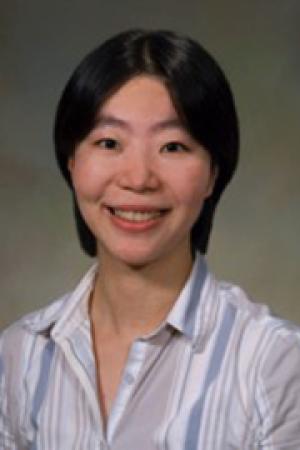
Electronics built with semiconductor technologies —vtransistors and integrated circuits — have had tremendous societal impact in the past decades. The advent of the quantum era, however, requires the development of new materials and paradigms. This is because the preservation of quantum coherence and quantum entanglement is essential to the operation of quantum devices, and classical scaling solutions, such as the copper interconnect layers used in any integrated circuit, no longer work. As quantum computers grow rapidly in size, the development of the quantum equivalent of the classical interconnects remains an open challenge. A network built with a special type of ballistic, one-dimensional quantum wires called edge states may offer a solution. In this lecture, Zhu will discuss the physics of edge states and in particular, the unique and fascinating properties of edge states associated with the quantum valley Hall effect in a material consisting of two atomic sheets of graphene. Zhu has been exploring this system as the backbone of a quantum interconnect network. She will discuss the progress made in understanding its fundamental properties and the proof-of-concept operations of edge-state-based waveguide, switch and beam splitter.
“A tale of two gases: Classical and quantum”
Presented by Marcos Rigol
Professor of Physics
March 22, 2025

The motion of particles in a classical gas is famously chaotic. A simple and common consequence of this chaos is that an enclosed gas equilibrates to a single temperature, which is why letting cold air into a room lowers the temperature of the whole room. In the last three decades, physics experiments have achieved such unprecedented control over the microscopic world that it is now possible to study equivalent situations with quantum gases. The findings have been rather surprising. Sometimes quantum gases act like classical ones and sometimes they act completely differently, settling into a state that cannot even be described by a temperature. In this lecture, Rigol will show that quantum theory allows us to understand both behaviors and to tell in advance exactly how a quantum gas will behave when taken out of equilibrium. Rigol will also discuss the potential applications of those developments.