
We advance science
through foundational research.
At Eberly, our research is widely recognized for its excellence. From laboratories to multidisciplinary research collaborations, we have a broad range of opportunities for you to take advantage of, ensuring that you gain deep, hands-on experiences in your chosen field.
Graduate Research
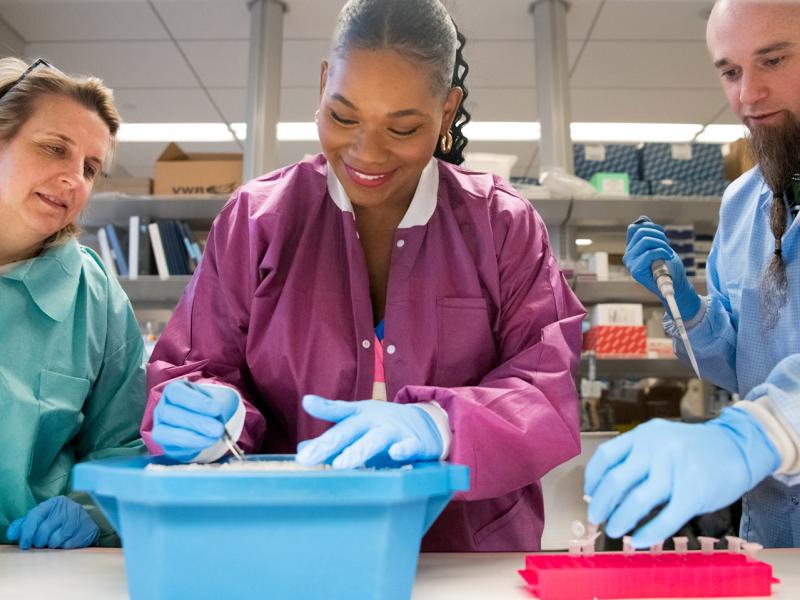
Our graduate students are engaged in groundbreaking research across the life, mathematical, and physical sciences. We provide access to exceptional facilities and critical funding to pursue your area of interest.

Undergraduate Research
You can excel as an undergraduate student by getting involved early, either through a summer program or semester internship. A myriad of diverse options are available to you. Explore below to get started.

Postdoctoral Research
We offer top-tier support for exceptional early career scientists to pursue both traditional and interdisciplinary research in a vibrant, highly collaborative environment.
Broader Impacts
Funding for Research
Certain grant opportunities, as well as internal and external funding resources, are readily accessible to you.

Research Across Penn State
With more than $900 million in annual research expenditures, Penn State ranks among the nation’s top 25 research universities.

Broader Impacts Resource Center
Get help planning, writing, and including broader impacts in your proposal for the National Science Foundation.


Innovation
Translating theoretical science to discoveries that can have a tangible impact on people's lives is a reality at the Eberly College of Science. The Office for Innovation can show you ways your discoveries can change lives.