
Summer Research a SURE Bet


As the days get longer and the temperatures higher, many students trade their pencils for pool noodles, sprinkling in warm-weather activities around trips home or seasonal jobs. For many students in the Eberly College of Science, the summer also provides an opportunity to dig into scientific research, in some cases for the first time.
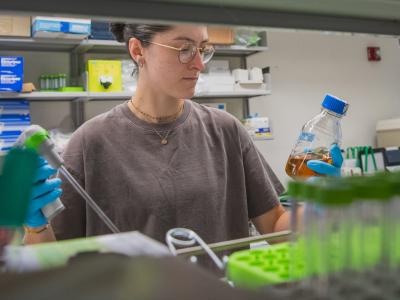
In addition to students working or volunteering in individual labs and participating in Research Experience for Undergraduates, this summer, a record 23 Eberly students participated in the college’s Summer Undergraduate Research Experience (SURE) program, working with faculty on research projects ranging from foundational science to applied, real-world problems.
“Research experiences help students develop essential skills such as communication, teamwork, critical thinking, and problem-solving and build support networks, and the SURE program is one of many ways students
can participate in research on campus” said Jennelle Malcos, associate dean for undergraduate education in the college. “The SURE program offers students a focused opportunity to not only engage in research, but to also participate in professional development programming and community building in a defined cohort. Providing our SURE students with research stipends is one way we can make this high-impact practice accessible to all student populations.”
During the paid, 9-week program, participants spend 40 hours a week dedicated to research and professional development. Because the program attracts students with a variety of majors, that research might include working in the field or greenhouse, at a lab bench, or under a fume hood, while others might focus on writing code and running computer simulations.
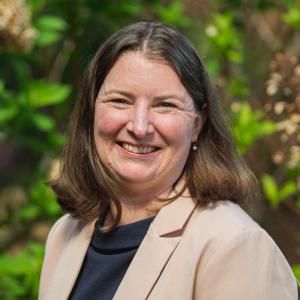
“This program often serves as an entry point for research for our students,” said Tiffany Mathews, director of the college’s Office for Science Engagement who leads the SURE program. “We accept a lot of students with no prior research experience, including change-of-campus students. Other participants may have joined a research group within the past year, got a taste working a few hours a week, and want an opportunity to really dig in. For this program, we tend to favor rising third- and fourth-year students who will find this experience particularly valuable as they are thinking about what comes next.”
Mathews said the experience often helps students understand what they like—or don’t like—about conducting research in a particular field and might highlight other experiences or areas of research they want to explore.
“It’s often a period of self-discovery, as students navigate a 40-hour work week and experience research in a new way,” she said. “Sometimes learning about science or math in a textbook is very different than applying those concepts in real life, and the program helps students figure out what career path might be right for them.”
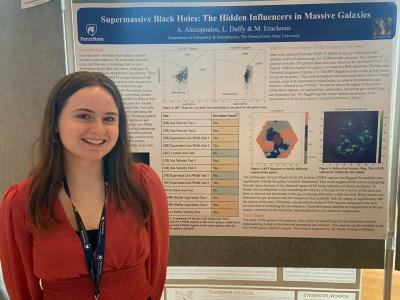
SURE student Aristea Alexopoulos, an astronomy and astrophysics major who participated in the program in 2024, said her SURE experience was the first time she was able to conduct real research.
“This was also my first experience with a 9-to-5 job so it took a while to adjust,” she said. “But I learned so much about being an adult, about computational astronomy, and how to talk about my research.”
After their summer with the SURE program, many students continue to work in the same research group, while others might seek to work in a different group or pursue other experiences. While continued work is usually funded by the faculty member, Mathews said she hopes to begin a new program that helps fund student research throughout the academic year.
“I really enjoyed applying the techniques that I had learned over the summer to a more independent project in the fall,” said Julia Mudryk, who participated in the SURE program in 2023 as a biology major. The SURE program and subsequent lab experience, she said, contributed to her being hired after graduation as a technician in a research lab.
Since summer 2023, 18 SURE students have received support from a scholarship established by alumnus Bruce Booth. Read about the career advice that he shared with them.
Developing Professional Readiness
In addition to their research, SURE students spend several hours a week with Mathews focusing on professional development activities, which range from mastering a handshake to reading a scientific journal article to creating a resume or CV.
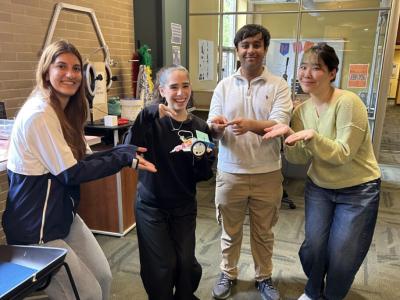
“During the academic year, students are busy taking classes, participating in clubs and activities, and sometimes working part-time; they don’t usually have time to think about building these skills,” Mathews said. “This year, thanks to the Eberly College of Science Alumni Society, we also added in an etiquette dinner, where students learned professional conduct and business decorum and also got to present their work to alumni.”
Mathews also organizes panels on improving relationships with mentors and dealing with impostor syndrome and invites the Graduate Women in Science (GWIS) group to host a Grad School 101 workshop.
“I was super nervous when I started the SURE program because I had not worked in a lab before,” said physics major Heer Patel, who first participated in the program in 2025. “I really related to the panel on imposter syndrome, and it helped me feel like I actually belong in research.”
SURE students also spend considerable time on science communication, hearing from speakers and practicing explaining their work in small peer groups. They start by briefly presenting a technique used in their research group, progress to an elevator pitch and 5-minute talk about their research, and culminate with a 7-minute talk to all SURE students and faculty. Students also present scientific posters at the college’s fall poster session, and many also participate in University-level research exhibitions during the academic year.
“SURE really gave me a crash course on what a good poster looks like, what a good presentation looks like, and helping understand your audience,” said Alexopoulos, who was awarded third place in the physical sciences category at the University-wide Undergraduate Exhibition in April 2025. “My mentor also helped me figure out how to tailor language, so you’re using words that your audience can understand.”
The students also participate in several outreach programs throughout the summer, improving their general communication skills by sharing about their college experience at the University's Spend a Summer Day event, where prospective students visit campus, and during Upward Bound events for high school students in the region.
Mathews emphasized that the professional development seminars and workshops, while designed for SURE students, are open to any Eberly undergraduate engaged in summer research. This past year, they were joined by 7 Benkovic Scholars—students participating in summer research in chemistry through a donor-funded program—as well as students working in labs funded by their mentors or by other scholarships.
“I'm just so grateful for the experience and all the skills that I've learned, not only research, but also science communication,” said Patel, who returned to the program in 2025 as a program assistant.
Returning summer research students are invited to become program assistants, helping out behind the scenes as they continue their research. For Patel, returning as program assistant was not only a welcome opportunity to acquire leadership experience, but also to try out working in a different lab.
“Program assistants act as mentors but also serve as a sounding board for other students, as sometimes students are more comfortable with peer-to-peer conversations,” Mathews said. “We have used program assistants for two years now, and it has been really helpful as the program has grown.”
Since summer 2022, 20 SURE students have received support from a scholarship established by alumni Fan-Li Chou and Stan Chia. Read why they chose to give back to Penn State.
Building Momentum
The SURE program has existed in its current form since 2022 and has served students in some capacity for almost a decade. Typically, the program supports 12 to 15 students each summer, but, thanks to support from the dean and donors, this year they supported twice that number.
“Our alumni and donors have allowed us to elevate the SURE program over the last few years, both through sharing their time to enhance programming, such as with the etiquette dinner, and through their generous donation of funds,” said Mathews. “Donor funding directly impacts the number of students we can bring into the program each year.”
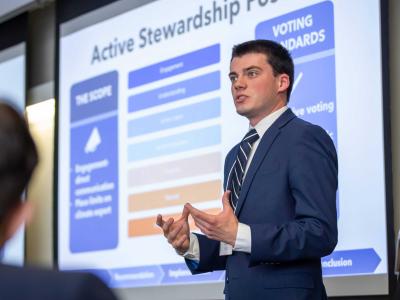
One student reflected on their experience with the SURE program, which they were able to participate in thanks to support from the Booth Summer Undergraduate Research Scholarship in the Eberly College of Science: “My summer with the sure program consisted of nothing but growth and gained experiences. The friendships and mentorships I have developed this summer are some that I deeply cherish, and I am beyond grateful for the generosity that allowed me to participate!”
Several donors have chosen to support summer undergraduate research after reflecting on their own experiences at Penn State. One such donor, William H. Meyer, is a devoted Penn Stater, who earned his bachelor’s degree in premedicine from Penn State in 1972 before receiving his medical degree from Sidney Kimmel Medical College at Thomas Jefferson University in Philadelphia in 1974. In his career, Meyer dedicated himself to improving outcomes for children and adolescents with cancer, including through his leadership roles in the Children's Oncology Group with the University of Oklahoma. Grateful for his Penn State experience and the opportunities it created, he established the Meyer Family Summer Undergraduate Research Program Endowment in the Eberly College of Science. He said he hopes that the scholarship will empower future Penn State students to pursue research, complete their education, and make a meaningful impact on the world.
“I hope to use my public speaking ability and passion for writing and debate to bridge the gap between the laboratory and the public, sharing knowledge that has the power to change lives,” said integrative science major Adam Lieb, who plans to attend law school after graduation. Lieb participated in the SURE program in 2025 and was supported by the Drs. Chou and Chia Undergraduate Research Program Scholarship. “The Eberly College of Science has shown me ways to make that dream a reality. Contributions like from donors like Drs. Chou and Chia help catalyze the next generation of scientists and change makers, and I'm incredibly grateful for the opportunity they created—one that will benefit me for a lifetime.”
Another alumnus, Steve Chalfin, established the Undergraduate Summer Research Fund in Memory of Dr. Richard Morgan in the Eberly College of Science in gratitude of his Penn State mentor and in recognition of the impact that undergraduate research can have on a student’s life trajectory. Chalfin, who graduated in 1976 with a degree in biophysics, credited his transition to medical school to his mentor, Dr. Richard Morgan, a medical doctor who later served as a professor of molecular biology. Chalfin was inspired to see a medical doctor doing research at a university and went on to earn a medical degree from Hahnemann University and specialize in ophthalmology. He hopes the fund will ensure that undergraduates with a desire to engage in research will have the opportunity to do so.
“We are so grateful to our alumni and donors who have recognized the value of undergraduate research and chosen to support summer research for our students”, said Malcos. “Our donors will shape how we expand the SURE program as well as how the college supports student research during the academic year. Our ultimate goal is that every student in the college will be able to experience research before they graduate, although it may look a little different for everyone. The SURE program is one important way we are supporting this goal”
28 donor-established funds in the college support ongoing undergraduate research initiatives, including SURE, as well as numerous additional one-time donations. To help the college expand these meaningful experiences, reach out to Michael Weyandt at mjw134@psu.edu.