
Research at Scale: Course-Based Undergraduate Research Experiences


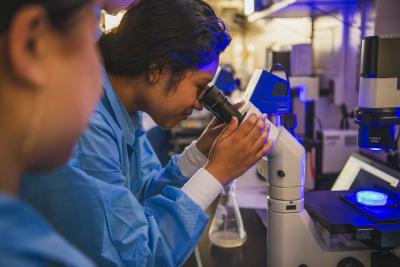
Conducting hands-on research is a valuable learning experience for students, who not only learn concepts and techniques that they can connect back to what they have learned in lectures, but also work among a team and gain confidence and independence in their skills. Considered a high-impact practice by the American Association of Colleges and Universities, research experiences allow students to see what doing science really feels like, face challenges and solve problems, and feel the excitement of contributing to scientific knowledge.
“Research is a cornerstone of the Eberly College of Science, and we provide a wide variety of opportunities to ensure that every student in the college can participate in a meaningful way that aligns with their academic and career goals,” said Jennelle Malcos, associate dean for undergraduate education in the college. “Course-based Undergraduate Research Experiences, or CURE courses, make research experiences accessible at scale.”
Traditional lab courses, which are often paired with a lecture of the same topic, are a great way for students to get acquainted with the scientific process, learn techniques, and the basics of data analysis and presentation of results. CURE courses take this a step further, providing an opportunity for students to ask real scientific questions with unknown outcomes or solutions. They might face unexpected hurdles, noisy or muddy data, and need to solve problems and iterate the process of asking questions.
The Eberly College of Science has ten CURE courses across five departments and is seeking to expand its offerings as part of its five-year strategic plan. Some of these courses target students as early in their college career as possible, such as the First-year Research Initiative (FRI) in biology and chemistry and a summer course for incoming biochemistry and molecular biology students. Other CURE courses target students later in their career when they have a better handle on scientific concepts, including research methods courses in mathematics and statistics.
According to several studies, CURE courses enhance student’s self-confidence in scientific thinking, increase inclusivity in science for underrepresented populations, and improve persistence in the fields of science and medicine.
“One of the mantras that my students hear a lot is that ‘mistakes are required for learning,’” said Carly Sjogren, associate teaching professor of biology and coordinator of the biology FRI. “Facing challenges is a normal part of the scientific process and mistakes don’t make you a failure. This can be a difficult concept for students to grasp, but ultimately I think it helps them acclimate to college learning with more confidence and maturity.”
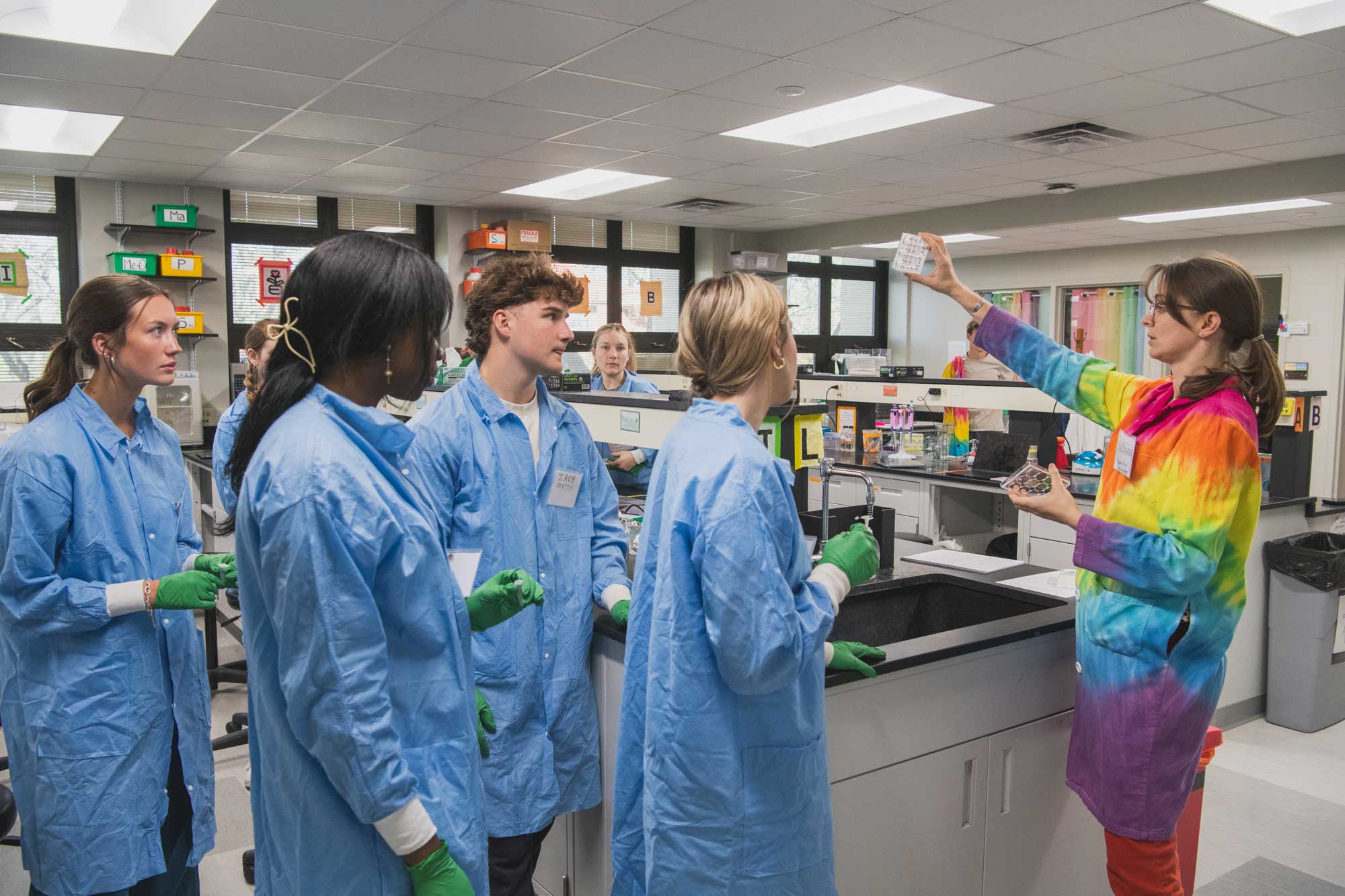
Cecelia Fletcher, a neurobiology major who participated in the biology FRI, said the lab changed the way she approaches learning: “Instead of memorizing content as I would in high school, both the lecture and lab pushed me to use critical thinking to approach concepts I didn't fully understand. I developed the ability to troubleshoot when things went wrong. Instead of giving up and moving on, I used what I learned throughout lab to approach problems from new angles.”
Sjogren said that CURE courses also emphasize the importance of being curious and asking questions.
“The FRI team showed me that it is alright and completely normal to ask for help, be the first one to raise a hand, or speak up if you are unable to understand something or are unable to complete an in-lab task,” said another student in the biology FRI course. “Previously, I always saw asking for help as embarrassing or a weakness, but the FRI TAs showed me that it is essential to question things in order to learn more and be successful, especially as a first-year college student.”
Many CURE courses rely heavily on support from teaching and learning assistants, who can provide guidance to students and a peer perspective. For example, the biology FRI has 4 peer learners in every Lab section along with a faculty mentor, so there is roughly one instructor for every four students. These TAs and LAs have taken the course before, so they are familiar with the research.
“The TA/LA program is the heart of the FRI,” Sjogren said. “Our TAs and LAs go through pedagogy training or are actively doing research, so they have a great perspective when helping our students. About half are returning peer learners, who also develop a proposal for how to improve some of the course material.”
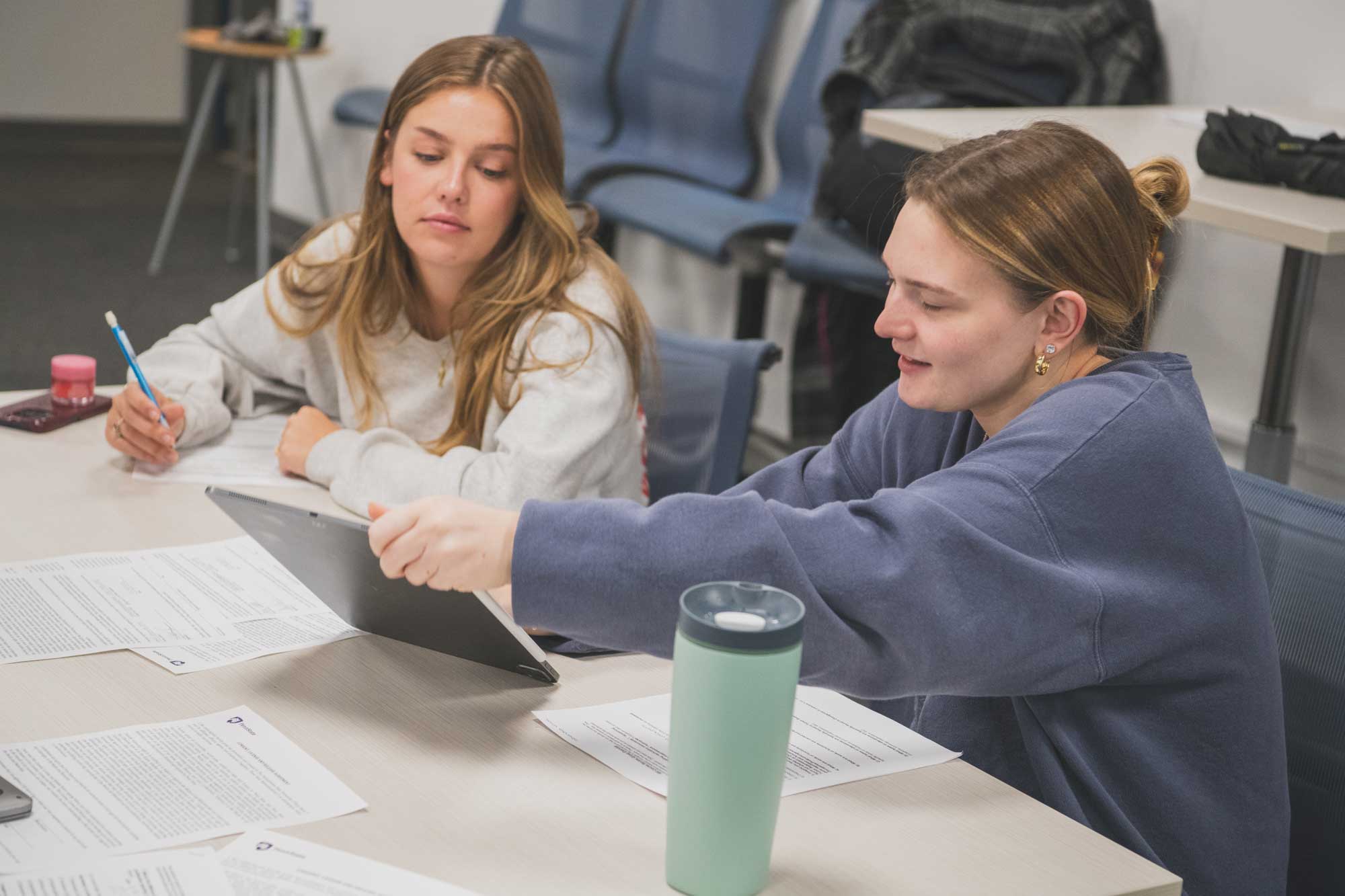
Students frequently come to TAs and LAs for advice, including on topics outside of the course materials, such as about registering for courses and tips for finding opportunities at the university.
“The TAs made independent research feel more attainable and less intimidating,” said Fletcher, who will be returning as a learning assistant for the biology FRI. “Watching previous students who are so passionate about the course was extremely motivating in pursuing my own research. Not only were they able to help by clarifying concepts and teaching specific lab techniques, but they were also amazing mentors outside of the lab. Their support through both the successes and challenges of research, along with their relatability as fellow students, pushed me to grow as a researcher.”
In addition to FRI and CURE courses, the college has scaled up the CURE experience through embedded research in its introductory biology labs. Developed by Associate Research Professor of Biology Sarah Bordenstein,
thousands of students conduct experiments focusing on the Wolbachia bacterium that lives inside the cells of many insects. From dedicated CURE courses and course experiences like the Wolbachia project to summer research opportunities and work in individual labs, Eberly students have many opportunities to experience research on their own terms, developing skills that will aid them on any career path.
Biology 116: Basic Concepts and Biodiversity
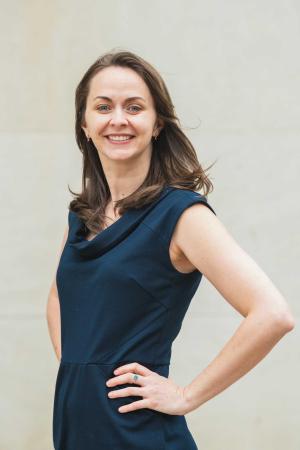
More than 100 students participate in the 2-credit biology FRI (Biology 116) each year, which is taken alongside the lecture-based Biology 114. The course explores fundamental concepts common to all organisms as well as the biological diversity of life on Earth. In the first few weeks, students become familiar with a variety of lab techniques. Then, based on the microbial and molecular sill sets they have learned, they design and conduct their own research projects.
“Students in the biology FRI course take ownership of every step of the scientific method,” Sjogren said. “It can be really shocking to students to not be told what to do, but promoting student autonomy, self-regulation, and self-learning are all deeply ingrained in the FRI. And it’s a really nice parallel for their college experience—you have to figure out what you want to do and who to ask for help to gain the skills you need.”
Student projects range from collecting, growing, and isolating DNA from bacteria on common surfaces to exploring questions about their personal genomics and complex patterns of inheritance. After coming up with several possible questions, they get feedback from their peers and the teaching assistants to help them navigate which question to pursue.
“In high school, my scientific experiments always had step-by-step instructions,” said neurobiology major Kaia Kirkeby, who participated in the FRI and will be returning as a learning assistant. “On the first day of the FRI, I opened the protocol and realized I was in charge of my experiment. The FRI helped me build my confidence as a researcher and helped me to self-advocate and gain a true appreciation for research.”
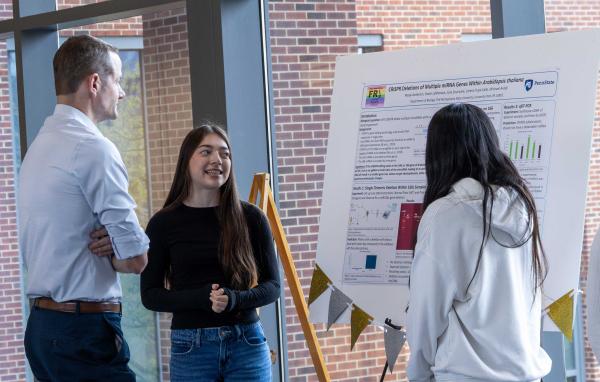
Once their projects are complete, students present their results, both in written reports and at a poster session at the end of the semester. They also learn how to create a resume and include the skills they learned during the course.
“Students coming out of the FRI are very well-prepared for their second year of college and well-positioned to find research opportunities,” Sjogren said. “We make sure they’re aware that we’re not just training them for this class and that these skills are useful for whatever comes next.”
BMB 490: Undergraduate Research in Cellular Dynamics
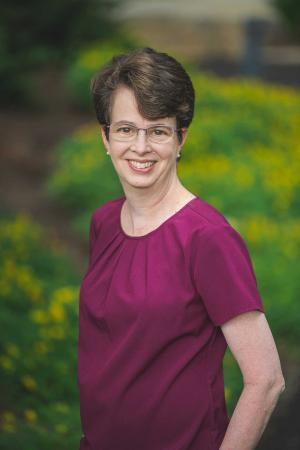
One upper-level CURE course is designed for students who transfer to University Park from other Penn State campuses in their third year.
“Our change-of-campus students sometimes have trouble securing a position working in a research lab because they may not have much research experience and because faculty sometimes prioritize students earlier in their college career potentially with more time to work in the lab,” said Lorraine Santy, associate professor of biochemistry and molecular biology who teaches the course. “BMB 490 gives students the training and experience they need to be more competitive in securing these positions.”
The course explores a variety of concepts in cell and molecular biology and culminates with the students conducting a research project that takes advantage of an imaging technique called expansion microscopy.
“With normal microscopes, even with the best lenses, there is a physical limit to the resolution of your image,” Santy said. “When you get too close; you can’t always tell if parts of what you are looking at are on top of each other or next to each other. You can get around this with expensive microscopes, or by doing intensive mathematical computations, but expansion microscopy has emerged in the last decade as a more accessible way to overcome this limitation.”
During a sabbatical in spring 2024, Santy learned the technique and tailored protocols to help ensure success for undergraduates with limited lab experience.
“Instead of using the microscope to zoom way in, with expansion microscopy we blow the sample up, making it bigger so its components are further apart. Then we can use a normal research-grade wide-field microscope to study its features.”
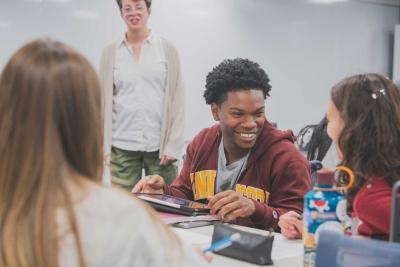
Pairs of students are assigned a protein from the Rab family, particularly those that help bring substances like proteins, fats, and molecules into a cell during a process called endocytosis. Students read scientific articles about and then culture cells expressing their Rab, stain their cells, embed them in a hydrogel and expand them. Then they image the expanded samples. All the students test if the association of endocytic cargo with their Rab changes after inhibiting a protein that regulates endocytosis. Additionally, once they have some preliminary observations, students design a research question about how compartments with their Rab change after endocytosis is initiated. After analyzing their images and data, the students present their results through a digital poster.
“The course reflects efforts to provide research opportunities to students wherever they might be on their education journey,” Santy said. “The experience has opened doors for those who wish to continue, and many students go on to secure positions in research labs. In fact, I took on three of the CURE students into my own lab because they already knew all techniques I use and could immediately jump into a research project.”