

Preparing Students to Be Socially Responsible Health Care Professionals


Beyond learning the nuances of everything from anatomy and disease to genetics and physiology, medical professionals must also prepare to be compassionate advocates for patients from a wide variety of backgrounds. To help students become socially responsible health care professionals, the Eberly College of Science’s Health Equity Leadership Program provides immersive community experiences, bringing students on-site to a variety of health-related organizations that serve the Philadelphia community.
“A few years ago, we noticed that students were having trouble articulating concepts like equity, identity, and bias in the context of health care and medicine and also struggling to authentically answer certain questions in their medical school applications,” said Samia Cooperider, director of undergraduate equity programs in the college from 2020 to 2026 who helped develop the program. “We wanted to develop a course that could provide opportunities for our students to engage with underserved communities.”
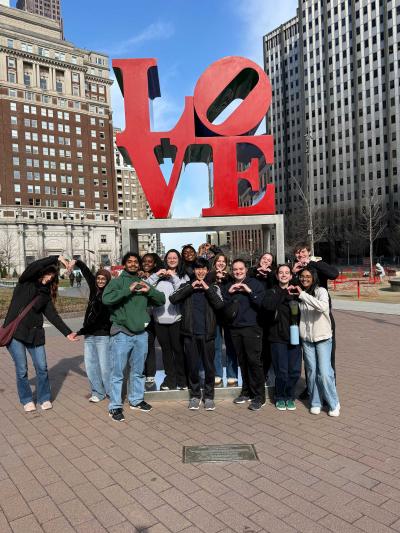
Cooperider, along with prehealth adviser John Moses-Brownson, developed the 1-credit course, SC 493 Health Equity Leadership Program (HELP). The course contextualizes the diverse life experiences of individuals living in urban areas, the challenges to accessing care, and the health-related consequences of living in a specific environment. Cooperider and Moses-Brownson worked closely with the college’s Office of Development and Alumni Relations and partnered with key alumni to help develop intentional learning experiences, framed around topics in the news or that medical schools identified as being important.
“We knew that experiential learning would be an unparalleled teacher for students,” said Cooperider, who led the program for the third time in spring 2026. “Each year, our curriculum focuses on the social determinants of health, which includes an individual’s neighborhood and environment, education, economic context, and access to health care. As part of this work, students collaborate in groups to examine multiple zip codes in Philadelphia and assess the social determinants on the health of those communities.”
As part of the semester-long course, students spend a week in Philadelphia. This year, students began their Philadelphia experience with a tour of the Mütter Museum, which has a wide variety of human and non-human biological specimens on display that depict a range of conditions. Cooperider said this provided a great introduction to questions around medical ethics, as most of the samples in the collection were acquired many years ago without consent. Subsequent stops included the Kensington Angels in Motion, a nonprofit organization that operates mobile street units to provide non-judgmental care to individuals experiencing homelessness, mental health challenges, and substance abuse disorders; and the Thomas Jefferson Center for Refugee and Immigrant Health, whose goals are to deliver compassionate, comprehensive care to refugees, asylum seekers, and immigrants in the greater Philadelphia community.
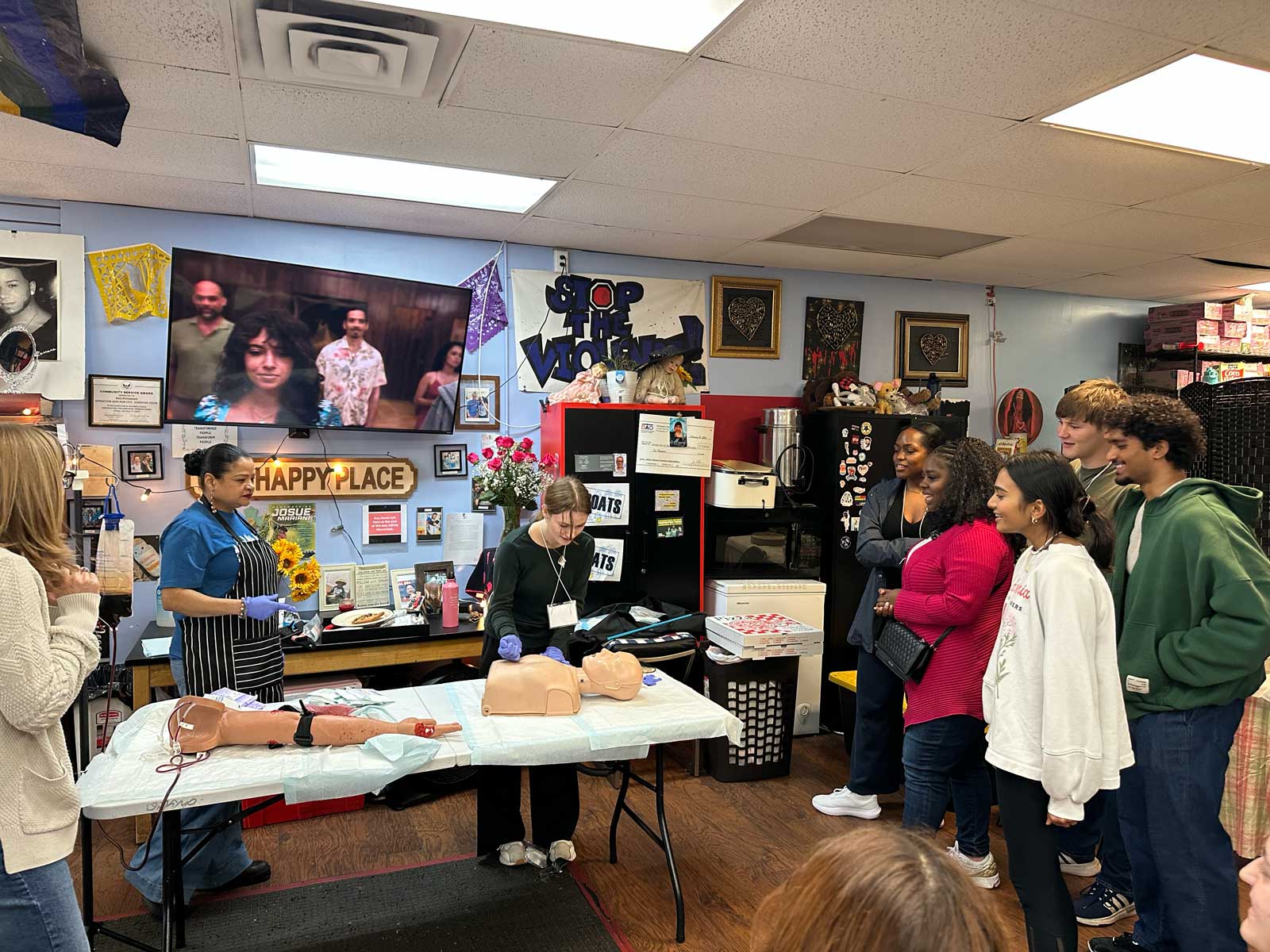
“Witnessing the lack of access and unequal distribution of care in Philadelphia gave me such an urge to act, reinforcing my commitment to advocacy for equitable health care not just in Philadelphia, but wherever I end up as a future physician,” said one student who participated in the program this year. “After going on this trip, I know health care is where I belong. I am so much more confident in uncomfortable situations and motivated to be a doctor who is willing to advocate for underserved communities.”
The students also visited the Children’s Hospital of Philadelphia (CHOP) Fostering Health Program, which specializes in the health care of children in foster care. This opportunity was made possible through a connection made by Eberly College of Science alumna Katie McPeak, primary care pediatrician and medical director for health equity of the CHOP Primary Care Network.
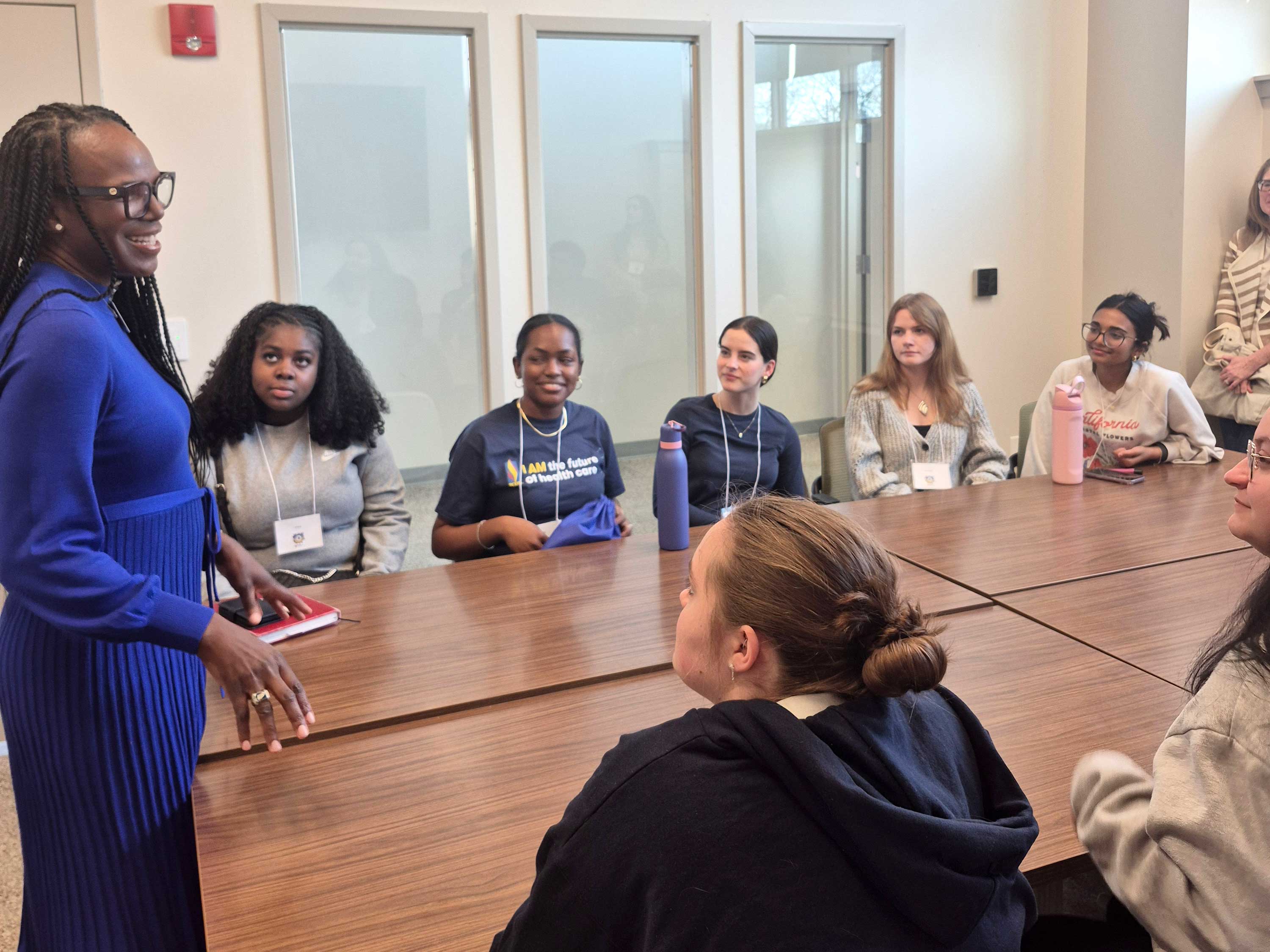
Additionally, students heard from college alumna and pediatric surgeon Ala Stanford at the Dr. Ala Stanford Center for Health Equity, which focuses on health care and advocacy and is an extension of the Black Doctors COVID-19 Consortium that provided no-cost care to more than 100,000 Philadelphians during the pandemic.
“We are so grateful to our alumni, including Dr. Katie McPeak and Dr. Ala Stanford, whose connections and support have allowed our students to visit a wide variety of organizations and meet a variety of medical professionals,” Cooperider said. “Dr. McPeak in particular has been vital to the success of HELP, and her willingness to collaborate with us and allow us into her network has really helped us grow the program.”
Through these experiences, Cooperider said, students come to understand the circumstances that have led to health-related inequity for various communities in Philadelphia. Students hear stories of real people, many of whom are from populations that could be among their future patients. During the course, students are also encouraged to reflect on their experiences, compare their preconceived notions with the reality of what they experienced, and to consider themselves and examine their own biases.
“This class directly opened my eyes to the many possible ways to provide care and support for a community, both including and outside of direct patient-physician interactions,” said one student who participated in the course in 2024 who is now a medical student at the Philadelphia College of Osteopathic Medicine. “I learned about the many vulnerable populations that are unaccounted for and often get overlooked in the current US health care system, such as people with substance use disorders, individuals recently released from jail, and children involved with gang violence and generational trauma. Through this experience, I developed a fervent resolve to help address some of the ongoing social determinants of health that are negatively affecting youth in Philadelphia.”
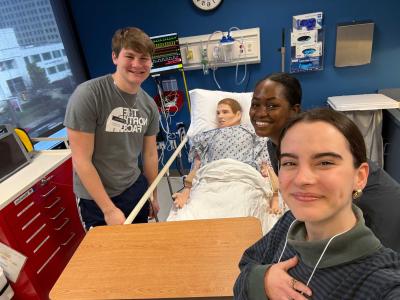
Community-based learning, like that offered in the HELP course, is considered a high-impact practice by the American Association of Colleges and Universities, in part, the association said, because “working with community partners is good preparation for citizenship, work, and life.”
“As a domestic service-learning opportunity, HELP provides meaningful opportunities that are accessible to a broad range of students,” said Jennelle Malcos, associate dean for undergraduate education in the college. “Sometimes, students find being able to speak with the local community more impactful than experiencing similar conditions abroad, especially if they will be working in the United States. For example, many of our premed students are eager to understand the health disparities that affect communities across our country and how they can help address these inequities as future physicians.”
Malcos said she hopes the program will evolve each year, as new partnerships present new opportunities. For example, future years could focus on urban health in cities such as Pittsburgh, Chicago, or Washington, D.C., or could focus on rural health.
“We are so grateful to the alumni partners and passionate instructors that have made the HELP course what it is today,” Malcos said. “We look forward to exploring new partnerships in the future that will provide new meaningful experiences for our students.”